

Sofa decking fabric is defined as a utility-grade textile installed directly beneath seat cushions to protect a sofa’s internal frame, springs, and webbing from wear. This hidden layer is not decorative. It is structural, and it does more for your sofa’s longevity than most homeowners ever realize. A standard sofa uses 2–3 yards of decking fabric priced at $3–$6 per yard, compared to $20–$80 per yard for premium face fabrics. That cost difference is exactly why professional upholsterers treat decking fabric as its own line item, and why you should too.
What is sofa decking fabric made from?
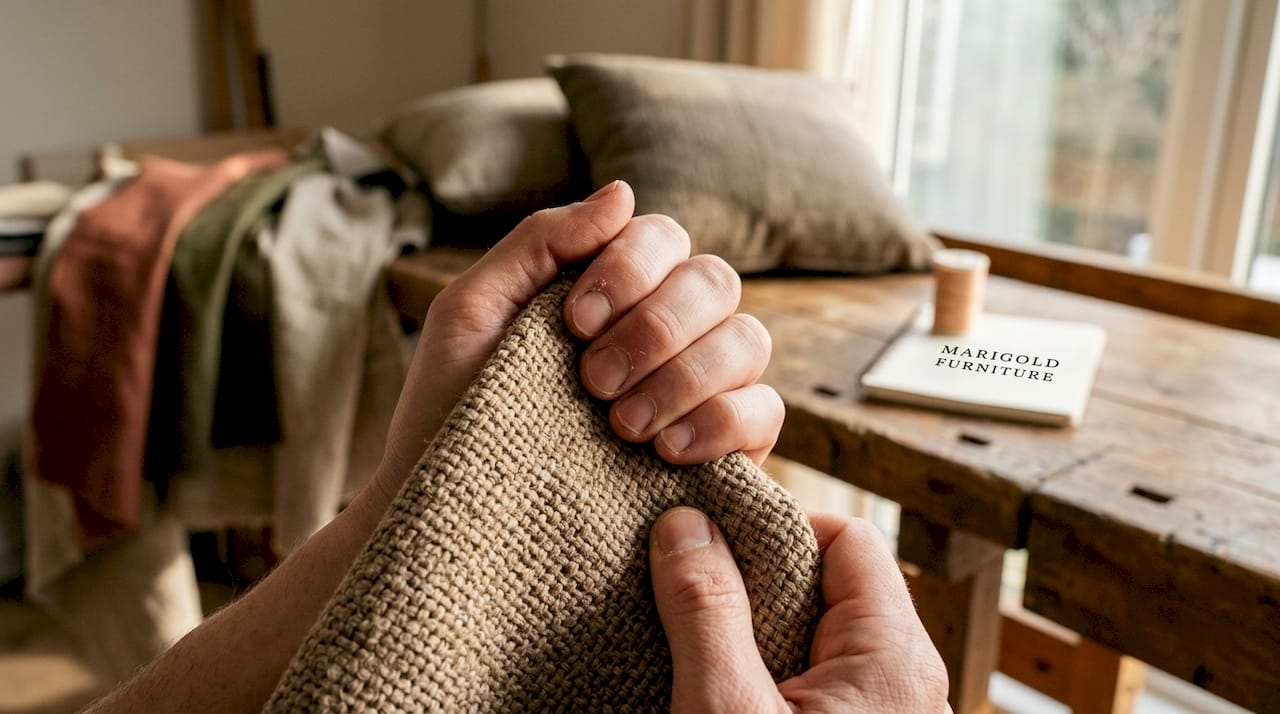
Decking fabric is typically a cotton or polyester blend chosen for utility rather than appearance. The goal is durability and flexibility at a low cost, not visual appeal, since this layer sits completely out of sight beneath your cushions.
The most common sofa decking materials include:
- Cotton muslin: A tightly woven, breathable option that holds its shape well under repeated cushion pressure. It is the traditional choice in American upholstery workshops.
- Polyester blends: More resistant to moisture and stretching than pure cotton. Polyester blends hold up well in high-use sofas and resist the kind of gradual loosening that causes cushion drift.
- Polypropylene: A synthetic option used in commercial and outdoor applications. It resists mildew and moisture, making it a practical choice for outdoor sofa fabric or any piece exposed to humidity.
- Utility-grade woven fabrics: These are heavier, tighter weaves designed specifically for the deck layer. They differ from premium face fabrics in that they prioritize tensile strength over texture or color.
The difference between sofa fabrics used on visible surfaces and those used for decking is significant. Decking fabric differs from premium face fabrics in both quality and design intent. Face fabrics like chintz, velvet, or linen are chosen for beauty. Decking fabric is chosen to work hard in silence.
Pro Tip: When reviewing upholstery fabric options, ask your upholsterer to show you the decking fabric separately. A quality decking material should feel firm and tightly woven, not thin or loosely constructed. Thin decking fabric is one of the first places manufacturers cut costs on budget sofas.
How does sofa decking fabric function in construction and support?
The deck layer in a sofa is the platform on which your cushions rest. Its job is to create a smooth, stable surface that hides the frame, springs, and webbing below while giving cushions a consistent base to sit on.
Here is how decking fabric contributes to sofa performance at each stage:
- Concealing structural components. The frame, sinuous springs, and webbing beneath your cushions are functional but rough. Without a deck layer, cushion covers would contact these surfaces directly, causing abrasion and premature wear.
- Preventing spring telegraphing. “Telegraphing” is the term upholsterers use when the outline of springs or webbing becomes visible through cushions. A firm, well-installed decking layer absorbs this pressure and keeps the cushion surface flat.
- Creating uniform cushion support. Uneven or loose decking fabric causes cushions to slide, wrinkle, or wear unevenly. A properly tensioned deck distributes weight across the full seat area.
- Protecting cushion undersides. The underside of a foam or down cushion is soft and vulnerable. Decking fabric acts as a buffer, reducing friction and extending the life of the cushion fill.
- Supporting the sofa’s long-term structure. Deck degradation, loose webbing, and frame issues cause visible cushion problems even when the cushions themselves are new. The deck is the foundation; everything above it depends on its integrity.
Understanding sofa frame construction helps clarify why the deck layer matters so much. The frame sets the shape, but the deck layer translates that structure into daily comfort.
“Many mistaken sofa discomfort complaints stem from degraded decking, not foam cushions alone. Replacing cushions without addressing the deck is like putting new tires on a car with a bent axle. The problem stays hidden until it gets worse.”
This insight from furniture anatomy specialists captures why the deck layer deserves more attention than it typically receives. When a sofa starts to feel uncomfortable, the deck is the first place a skilled upholsterer checks.
Why is decking fabric a separate cost in upholstery projects?
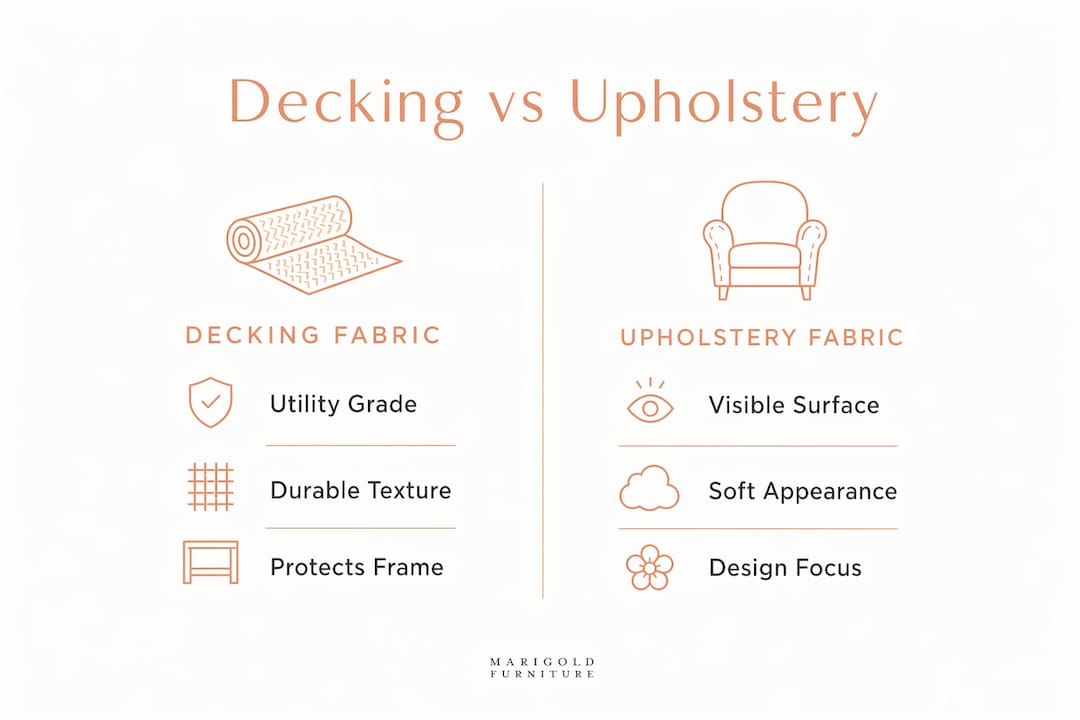
Decking fabric should appear as a separate item in any upholstery quote. When it is lumped into the main fabric estimate, homeowners end up with two problems: they underestimate total material costs, and they may run short on the face fabric they actually wanted.
The pricing gap between decking and face fabric is the core reason this separation matters. Paying $5 per yard for decking instead of $40 per yard for a premium floral chintz frees your budget for the fabric that actually defines the look of your sofa. Using decking fabric is a cost-effective means to preserve premium fabric for visible areas without sacrificing durability underneath.
Key things homeowners should know before any upholstery project:
- Confirm itemization in writing. Ask your upholsterer to list decking fabric as its own line in the material estimate. This prevents confusion about what your main fabric yardage covers.
- Watch for dye-lot issues. Failure to itemize decking fabric often leads to unexpected project costs and dye-lot mismatches when additional fabric must be sourced mid-project.
- Understand the yardage difference. A standard sofa typically needs 2–3 yards of decking fabric. That is a small addition to any quote, but it matters for accurate budgeting.
- Never assume it is included. Most homeowners mistakenly assume decking fabric is part of their main fabric order. Professional upholsterers always itemize it separately, and you should expect the same transparency.
Pro Tip: When ordering a custom sofa or commissioning reupholstery, ask directly: “Is decking fabric included in this estimate, and what material are you using?” That single question separates experienced upholsterers from those cutting corners.
What are the special considerations for sleeper sofas?
Sleeper sofas present a unique challenge for decking fabric. The folding bed mechanism means the deck cannot be a single, rigid panel. It must flex, fold, and return to shape repeatedly without tearing or bunching.
Deck fabric on sleeper sofas must accommodate hinge movement and friction differently than fixed sofas. The fabric is typically cut in sections that align with the hinge points of the folding frame, allowing each panel to move independently without stress on the seams.
| Feature | Standard sofa deck | Sleeper sofa deck |
|---|---|---|
| Installation method | Single continuous panel | Sectioned panels at hinge points |
| Fabric flexibility required | Low to moderate | High |
| Friction exposure | Cushion contact only | Cushion contact plus mechanical movement |
| Replacement frequency | Low | Moderate to high |
| Fabric weight preference | Medium utility weight | Lighter, more flexible weave |
Sleeper sofa decks require specialized flexible fabrics and installation techniques to accommodate folding mechanisms without compromising durability. If you are reupholstering a sleeper sofa, confirm that your upholsterer has specific experience with this construction. A standard deck installation on a sleeper sofa will fail at the hinge points within months. The fabric choice and the cutting pattern both matter here in ways that simply do not apply to a stationary sofa.
For homeowners choosing between upholstery-grade fabric types, understanding these distinctions helps you ask better questions and make more confident decisions.
Key Takeaways
Sofa decking fabric is the structural foundation of every upholstered seat, and understanding it protects both your budget and your sofa’s long-term comfort.
| Point | Details |
|---|---|
| Decking fabric is utility-grade | It is a cotton or polyester blend chosen for durability, not appearance, installed beneath cushions. |
| It prevents cushion sagging | A properly tensioned deck keeps cushions flat, stable, and free from spring telegraphing. |
| It is a separate budget line | Always confirm decking fabric is itemized separately in any upholstery quote to avoid cost surprises. |
| Sleeper sofas need flexible decking | Hinged deck sections require lighter, more flexible fabric cut in panels aligned to the fold points. |
| Degraded decking causes discomfort | Many cushion complaints trace back to a worn deck layer, not the cushion fill itself. |
The hidden layer that defines your sofa’s life
I have spent years working with upholstered furniture, and the question I hear most often from homeowners is some version of: “Why does my sofa feel uncomfortable when the cushions look fine?” The answer, almost every time, is the deck.
Most people never think about what sits between their cushions and the frame. They focus on the face fabric, the cushion fill, the leg finish. The deck layer is invisible, so it gets ignored. But professional upholsterers always itemize decking fabric separately because they know it is doing real structural work every single day.
My honest advice: treat the deck layer as seriously as you treat the fabric you can see. When you are buying a new sofa or commissioning reupholstery, ask about it. A maker who cannot tell you what decking material they use, or who bundles it into the main fabric estimate without explanation, is telling you something important about how they build furniture.
The sofas I trust most are the ones built with the same care underneath as on top. That is not a romantic idea. It is just good construction.
— Kevin O’Gara
Marigold Furniture: custom sofas built with care at every layer
Every sofa Marigold Furniture crafts in Dallas and Los Angeles is benchmade by hand, with attention paid to every layer of construction, including the deck. When you choose a Florence Arched Floral Sofa or the Seville Tufted-Back Floral Sofa, you are not just selecting a fabric. You are choosing a piece built to last, with responsibly sourced materials and over 20 chintz and floral fabric options for the surfaces you see every day.

Marigold delivers made-to-order sofas in 4–6 weeks, with the kind of upholstery transparency that lets you ask every question covered in this article and get a real answer. If you are ready to choose a sofa built right from the frame up, custom floral sofa design is where to begin.
FAQ
What is sofa decking fabric used for?
Sofa decking fabric is a utility textile installed beneath seat cushions to protect the sofa’s internal frame, springs, and webbing from wear. It also creates a smooth, stable surface that prevents cushion sagging and sliding.
Is decking fabric the same as upholstery fabric?
Decking fabric and upholstery face fabric are different materials with different purposes. Decking fabric is a low-cost utility weave chosen for durability, while face fabric is selected for appearance and texture.
How much decking fabric does a sofa need?
A standard sofa typically requires 2–3 yards of decking fabric. This is separate from the main face fabric yardage and should be listed as its own item in any upholstery estimate.
Does a sleeper sofa need special decking fabric?
Yes. Sleeper sofas require flexible decking fabric cut in sections that align with the folding mechanism’s hinge points. Standard single-panel deck installations will fail at the hinges under repeated folding.
How do I know if my sofa’s decking fabric needs replacing?
If your cushions feel uneven, slide forward, or show visible impressions from springs or webbing, the deck layer is likely worn or loose. Replacing the decking fabric often resolves discomfort that new cushions alone cannot fix.