

Sofa frame construction is defined as the combination of materials and joinery techniques that form a sofa’s structural skeleton, determining how long it lasts and how well it holds its shape. Understanding what is sofa frame construction gives you real power as a buyer or builder. A strong frame uses kiln-dried hardwood species like oak, maple, or beech, or high-density engineered wood, joined with mortise and tenon or glued-and-screwed connections, and tested against standards like BIFMA X5.1. Get the frame wrong, and no amount of beautiful upholstery will save you from a sagging, creaking sofa within a few years.
What materials are used in sofa frame construction?
The frame material is the single biggest predictor of sofa lifespan. Not all wood is equal, and the differences matter more than most shoppers realize.
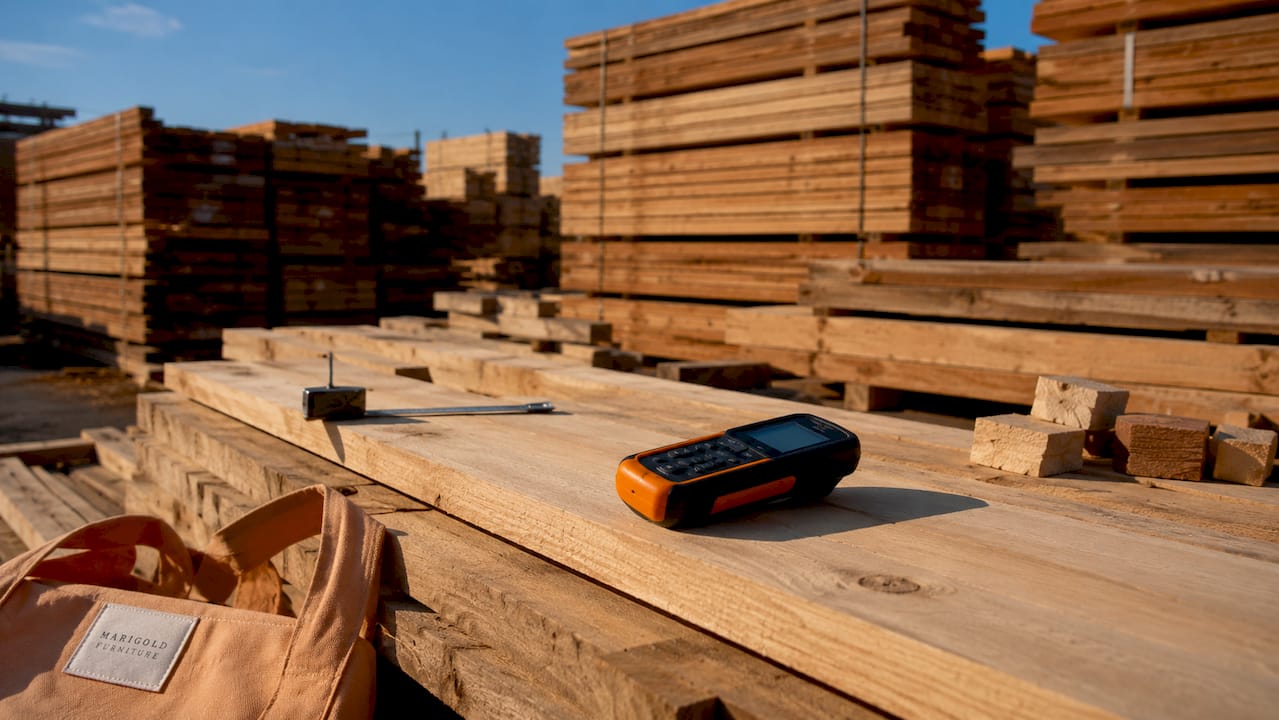
Kiln-dried hardwood
Kiln-dried hardwoods like oak, maple, and beech with a moisture content of 8–12% are the gold standard for sofa frames. Wood dried to this range resists warping, shrinking, and joint loosening over time. Residual moisture above 12% causes structural shifting within years of normal use. Frames shipped with moisture content above 16% warp quickly once they acclimate to a home environment. That is why kiln drying is a process specification, not just a marketing phrase.
High-density plywood
High-density plywood at or above 680 kg/m³ handles flat load distribution better than softwood. It resists warping across wide seat panels and back sections where weight spreads evenly. The catch is that plywood performs well only when corner blocks are glued and bracketed, not just stapled. All-plywood frames without metal brackets or glued corner blocks fail earlier under shear loads. Plywood is a strong supporting player, not a solo performer.

Softwood, MDF and particleboard, and metal
Softwood species like pine compress and dent under sustained weight, making them a poor choice for primary structural members. MDF and particleboard are the weakest options. They often get lumped in with all engineered wood, but that is misleading: high-density plywood, covered above, is engineered wood too, and it performs well when paired with strong joinery. MDF is prone to screw pull-out and produces creaking noises that signal low durability. Metal frames serve a specific niche. They suit modular and sleeper sofas where dimensional stability around mechanisms is critical, but metal frames are not inherently stronger than hardwood frames in everyday seating use.
- Kiln-dried hardwood (oak, maple, beech): Best for joints and rails; moisture content must be 8–12%
- High-density plywood (≥680 kg/m³): Best for flat panels; requires glued corner blocks
- Softwood (pine, fir): Acceptable for secondary members only; avoid in primary load-bearing areas
- MDF and particleboard: Avoid entirely in structural applications; prone to failure within 3–5 years
- Metal: Appropriate for sleeper and modular sofas; not a universal upgrade over wood
Pro Tip: Ask any seller to confirm the wood species and moisture content in writing. A reputable maker will answer without hesitation. Vague answers like “solid wood” without species names are a warning sign.
How are sofa frames assembled and joined?
The best materials in the world fail if the joints are weak. Frame assembly is where craftsmanship separates a sofa that lasts decades from one that wobbles within a year.
-
Mortise and tenon joints. Mortise and tenon is the strongest joinery method for 90-degree connections in sofa frames. One piece of wood receives a precisely cut cavity (the mortise), and the mating piece has a shaped projection (the tenon) that fits inside it. This mechanical lock resists twisting and racking forces that occur every time someone sits down or shifts position. Glue applied to the joint adds adhesive strength on top of the mechanical connection.
-
Glued and screwed joints. Glued and screwed connections combine adhesive with mechanical fasteners for lasting rigidity. The screw holds the joint while the glue cures, and both work together under load. This method is the practical standard in quality production furniture where full mortise and tenon work is cost-prohibitive.
-
Dowels. Dowels add alignment and some shear resistance, but they rely almost entirely on adhesive strength. Dowel-only joints are less reliable on their own than glued-and-screwed connections. They work best as a supplement to other joinery, not as the primary fastening method.
-
Corner blocks. Triangular corner blocks glued and screwed into the inside corners of the frame dramatically increase rigidity. They prevent the frame from racking side to side. A frame without corner blocks will develop wobble over time, even if the primary joints are sound.
-
Staples and nails alone. Frames held together solely by staples typically fail within 3–5 years. Staples pull out of wood grain under repeated stress. They are acceptable for attaching webbing or fabric but never for structural frame connections.
Pro Tip: When shopping, press firmly on the arm of a sofa and feel for any flex or give at the joint where the arm meets the seat frame. A quality frame feels completely solid. Any movement at that junction means the joinery is weak.
What is hybrid sofa frame construction and why does it matter?
Hybrid sofa frame construction is defined as a design that combines hardwood rails at structural joints with high-density plywood panels in flat-load areas. This approach matches each material to the load type it handles best.
Practitioners in the furniture industry distinguish between two types of loads. Hardwood handles point loads, which are concentrated forces at joints and legs. High-density plywood distributes flat loads across seat bases and back panels without warping. An all-hardwood frame is overbuilt for flat panels and expensive. An all-plywood frame struggles at joints under point loads. A hybrid frame solves both problems at once.
The durability evidence for hybrid construction is concrete. Hybrid frames reliably pass 100,000 sit cycles per BIFMA X5.1 commercial durability standards. BIFMA X5.1 is the benchmark used for contract and hospitality furniture, which faces far heavier use than a residential sofa. Passing that standard in a residential piece signals genuine structural confidence.
| Frame type | Strength at joints | Flat panel performance | Typical cost range |
|---|---|---|---|
| All-hardwood | Excellent | Good but heavy | Highest |
| All-plywood | Fair | Excellent | Moderate |
| Hybrid (hardwood rails + plywood panels) | Excellent | Excellent | Moderate to high |
| Budget softwood or MDF | Poor | Poor | Lowest |
Identifying a hybrid frame before purchase takes a few direct questions. Ask whether the seat rails and leg joints use solid hardwood and whether the seat deck and back panel use plywood. A maker who builds hybrid frames will describe the distinction clearly. Vague answers pointing only to “wood construction” suggest a single-material or budget approach.
- Hybrid frames reduce warping in wide panels while maintaining joint strength
- They lower failure rates compared to all-plywood frames under shear loads
- They cost more than budget softwood frames but deliver measurably longer service life
- BIFMA X5.1 certification is the clearest third-party proof of hybrid frame durability
What spring system belongs on a quality frame?
The frame never works alone. Sitting on top of it is a suspension system, and the two must be engineered together. Eight-way hand-tied construction is the gold standard: individual coil springs, typically nine-gauge tempered steel, are set on an interwoven jute webbing base, secured to the frame’s hardwood rails, and tied by hand to their neighbors in eight directions — front to back, side to side, and along both diagonals. Those ties turn dozens of independent coils into one interlocking grid, so weight applied at any point distributes across the entire seat instead of concentrating under the sitter.
Most mass-produced sofas use sinuous springs instead — continuous lengths of heavy-gauge wire bent into a serpentine shape and clipped across the seat frame from front to back. Sinuous springs are fast to install and adequate for furniture built to a price point, but each one works as an independent arch with limited lateral distribution. That is why sinuous-spring sofas develop a “favorite seat” impression over time: the springs under the most-used cushion fatigue faster than the rest. The metal clips can also loosen and develop squeaks with age, while a properly tied coil system on a jute webbing base stays silent.
The connection to frame construction is direct, and it runs both ways. Coil springs require rails dimensioned for them, a proper webbing platform, and the right seat height, so a frame must be engineered for eight-way hand-tied construction from the start — retrofitting coils into a sinuous-spring frame means rebuilding the entire seat platform. In the other direction, a frame that shifts even slightly will eventually compromise the spring system above it. A hand-tied seat on a warping frame fails just like a cheap one.
Two showroom tests reveal the suspension without removing a single staple. Press a flat hand firmly into the seat deck: hand-tied coils compress with smooth, even resistance and rebound in a controlled way, while sinuous springs feel bouncier and less consistent. Then press down on one corner of the seat and watch the rest of the platform. Slight movement across the whole seat is the hallmark of an interconnected hand-tied system. The spring base also shapes how every cushion performs — the same foam feels stiff on sinuous springs and responsive on hand-tied coils — so pair this check with our guide to sofa cushion fill when comparing pieces.
Pro Tip: Ask the maker to name the suspension: eight-way hand-tied coil, sinuous spring, or webbing-only. A well-tied coil system can last 25 years or more with normal residential use. When a quality sofa finally needs attention, it is almost always the fabric or cushion fill that wears first, not the springs.
How do you evaluate sofa frame quality before buying or building?
Frame quality is invisible under upholstery, but several physical tests reveal what is hidden inside. These techniques work equally well for shoppers in a showroom and DIYers reviewing their own plans.
The lift test
Lift one front corner of the sofa about six inches off the floor and watch the opposite front leg. If that opposite leg rises immediately, the frame has strong corner reinforcements and good torsional rigidity. If the opposite leg stays on the floor while the frame twists, the joints and corner blocks are weak. This single test reveals more about frame construction than any product description.
The wobble and creak check
Sit on the sofa and shift your weight side to side. Then press down on each arm firmly. Any wobble, flex, or creaking sound points to loose joints or missing corner blocks. Creaking specifically often indicates MDF components or staple-only joinery beginning to fail. A well-built frame is completely silent and still under this kind of deliberate stress.
Verifying materials and construction
- Ask for the wood species by name. “Hardwood” without a species is not a sufficient answer.
- Confirm kiln drying. The moisture content should be 8–12% at the time of manufacture.
- Ask whether joints are mortise and tenon, glued and screwed, or dowel-based.
- Ask whether corner blocks are present and how they are attached (glued and screwed is correct; stapled is not).
- Ask what suspension the seat uses — eight-way hand-tied coil, sinuous spring, or webbing-only — and how it attaches to the rails.
- For DIY builds, plan your frame with hardwood rails at all joints and plywood for the seat deck.
Common failure signs to watch for
Sagging seat cushions that do not recover their shape often point to a failed seat deck, not just worn cushions. Visible warping along the back or arms signals high-moisture wood that was never properly kiln-dried. Loose joints that develop within the first year of normal use indicate staple-only or dowel-only construction. Understanding sofa durability factors before you buy prevents these disappointments entirely.
Pro Tip: For DIY builders, use a moisture meter on every piece of lumber before assembly. Wood above 12% moisture content should be stored in a conditioned space until it reaches the target range. Rushing this step is the most common cause of DIY frame failure.
Key Takeaways
A sofa’s lifespan is determined by its frame materials and joinery before a single cushion or fabric is added.
| Point | Details |
|---|---|
| Frame material sets the lifespan | Kiln-dried hardwood at 8–12% moisture and high-density engineered wood both hold up well; MDF and particleboard do not. |
| Hybrid frames outperform single-material designs | Hardwood rails at joints plus high-density plywood panels pass BIFMA X5.1 at 100,000 sit cycles. |
| Mortise and tenon is the strongest joint | Glued-and-screwed connections are the practical alternative; staples alone fail within 3–5 years. |
| The suspension is part of the frame system | Eight-way hand-tied coils distribute weight evenly and last 25+ years, but the frame must be engineered for them from the start. |
| The lift test reveals hidden quality | If the opposite front leg rises when you lift one corner, the frame has proper corner reinforcement. |
| Avoid MDF and particleboard in structural areas | These materials are prone to screw pull-out and produce creaking that signals early failure. |
Frame quality is the conversation nobody has until it’s too late
I have spent years looking at sofas from the inside out, and the pattern I see again and again is the same. Homeowners spend hours choosing fabric, debating leg finishes, and measuring for room fit. Then they sit on a sofa for three years, hear a creak, feel a sag, and wonder what went wrong. The frame was wrong from the start.
The furniture industry has a quiet problem with transparency. Most product listings describe upholstery in loving detail and say almost nothing about the frame. “Solid wood construction” appears on pieces built with pine rails and MDF panels. That phrase is technically accurate and practically meaningless. You have to ask the specific questions outlined here, because the defaults in mass production favor cost over longevity.
My honest recommendation for DIYers is to treat the frame as the entire project. The upholstery is a finishing step. If you get the frame right, with kiln-dried hardwood at every joint, glued-and-screwed corner blocks, and high-density plywood on the seat deck, the sofa will outlast most of what you can buy at retail. If you rush the frame to get to the fun part, you will rebuild it within five years.
The hybrid construction approach is where I land for both buying and building advice. It is not the cheapest path, but it is the most rational one. Matching hardwood to point loads and plywood to flat loads is not a marketing concept. It is applied physics, and the BIFMA X5.1 test results back it up. When a maker can tell you exactly which species they use, what moisture content they target, and how they join the rails, that transparency is itself a quality signal worth paying for.
— Kevin O’Gara
Sofas built the way frames should be, by Marigold Furniture
Understanding frame construction changes how you see every sofa you consider. The details that matter most, the frame material and the joinery, are exactly where Marigold Furniture puts its craft.
Each Marigold sofa is benchmade in Dallas and Los Angeles using FSC-certified engineered wood frames with reinforced, interlocking joinery, built for lasting structure. The Florence Arched Floral Sofa is a beautiful example of what happens when frame integrity and textile mastery come together in one piece. For homeowners who want a sofa that anchors a room for decades, not just seasons, Marigold’s custom design options let you choose your fabric from over 20 chintz and floral patterns while trusting that the structure beneath is built to last. Made-to-order pieces ship within 4–6 weeks.
FAQ
What is sofa frame construction?
Sofa frame construction is the combination of materials and joinery techniques that form a sofa’s structural skeleton. It determines the sofa’s strength, shape retention, and lifespan under daily use.
What wood is best for a sofa frame?
Kiln-dried hardwoods like oak, maple, and beech with a moisture content of 8–12% are the traditional choice, and high-density engineered wood such as plywood also performs well when the joinery is strong. Avoid MDF and particleboard in structural areas.
How long should a quality sofa frame last?
A sofa frame built with kiln-dried hardwood, mortise and tenon or glued-and-screwed joints, and proper corner blocks should last well beyond a decade under normal residential use. Frames using MDF or staple-only joinery typically fail within 3–5 years.
What is a hybrid sofa frame?
A hybrid sofa frame combines hardwood rails at structural joints with high-density plywood panels in flat-load areas. This design passes BIFMA X5.1 commercial durability testing at 100,000 sit cycles.
How can I test a sofa frame before buying?
Lift one front corner of the sofa and watch the opposite front leg. If it rises immediately, the frame has strong corner reinforcement. Also press firmly on the arms and shift your weight to check for wobble or creaking, both signs of weak joinery.