

Sofa cushion fill is the material packed inside your cushion casings that determines how a sofa feels when you sit down, how well it supports your body over time, and how long it holds its shape. The four main categories are foam, feather and down, synthetic fiber, and hybrid combinations. Each delivers a genuinely different seating experience, a different maintenance rhythm, and a different lifespan. Knowing what’s inside your cushions before you buy is one of the most practical decisions you can make as a homeowner.
The fill also shapes the sofa’s silhouette. A foam-core cushion holds crisp, tailored lines; a feather-filled cushion settles into a relaxed, lived-in look. Neither is wrong. They’re just different promises about how your living room will feel on an ordinary Tuesday evening.
What is sofa cushion fill, and what are the main types?
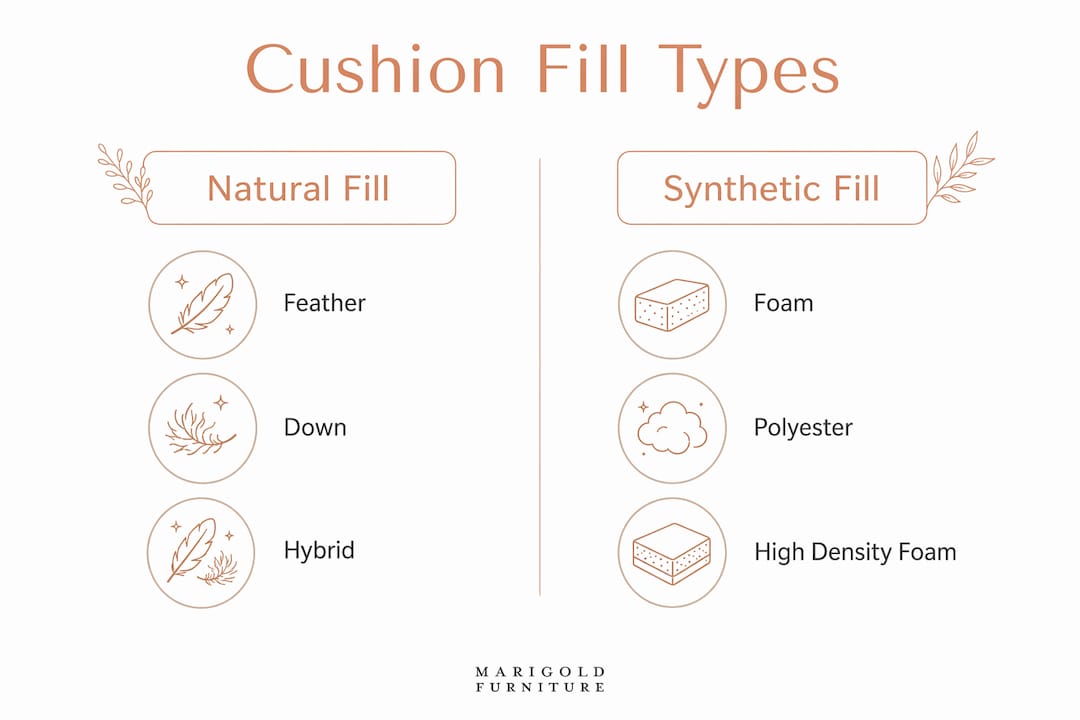
The term “cushion fill” refers to the internal material that gives a sofa cushion its body, and it covers a surprisingly wide range of options:
- High-density polyurethane foam: The most common seat cushion material in American furniture. Density is measured in pounds per cubic foot (lb/ft³), and that number matters more than firmness ratings alone.
- High-resilience (HR) foam: A springier, more durable grade of foam that compresses under weight and rebounds cleanly. HR foam at 1.8 lb/ft³ or higher is the benchmark for long-term daily use.
- Feather and down blends: A mix of outer feathers for structure and soft down clusters for loft. The higher the down-to-feather ratio, the softer and more cloud-like the cushion feels.
- Synthetic fiber (polyester fiberfill): Lightweight, soft, and budget-friendly. Used frequently in back cushions where plushness matters more than structural support.
- Hybrid fills: A foam core wrapped in fiber or feather batting. This layered approach is what most quality sofas use because it captures the support of foam and the softness of a wrap in one cushion.
- Pocket spring cushions: Individual springs wrapped in fabric, then surrounded by foam or fiber. They offer a responsive, neither-too-firm-nor-too-soft feel with lower maintenance than feather.
- Memory foam: Conforms closely to body contours and recovers slowly. Denser than standard foam and well-suited to occasional-use seating.
- Cotton batting: A traditional fill used as a wrap layer or standalone stuffing in heritage-style pieces. Firms up with compression over time.
Understanding sofa frame construction alongside fill type gives you the full picture of what makes a sofa last.
Feather and down filling: the luxurious tradeoff
Feather and down cushions deliver a soft, enveloping “sink-in” feel that foam simply cannot replicate. They mold around your body rather than resisting it, and they give a sofa that effortlessly relaxed aesthetic beloved in traditional and transitional interiors.
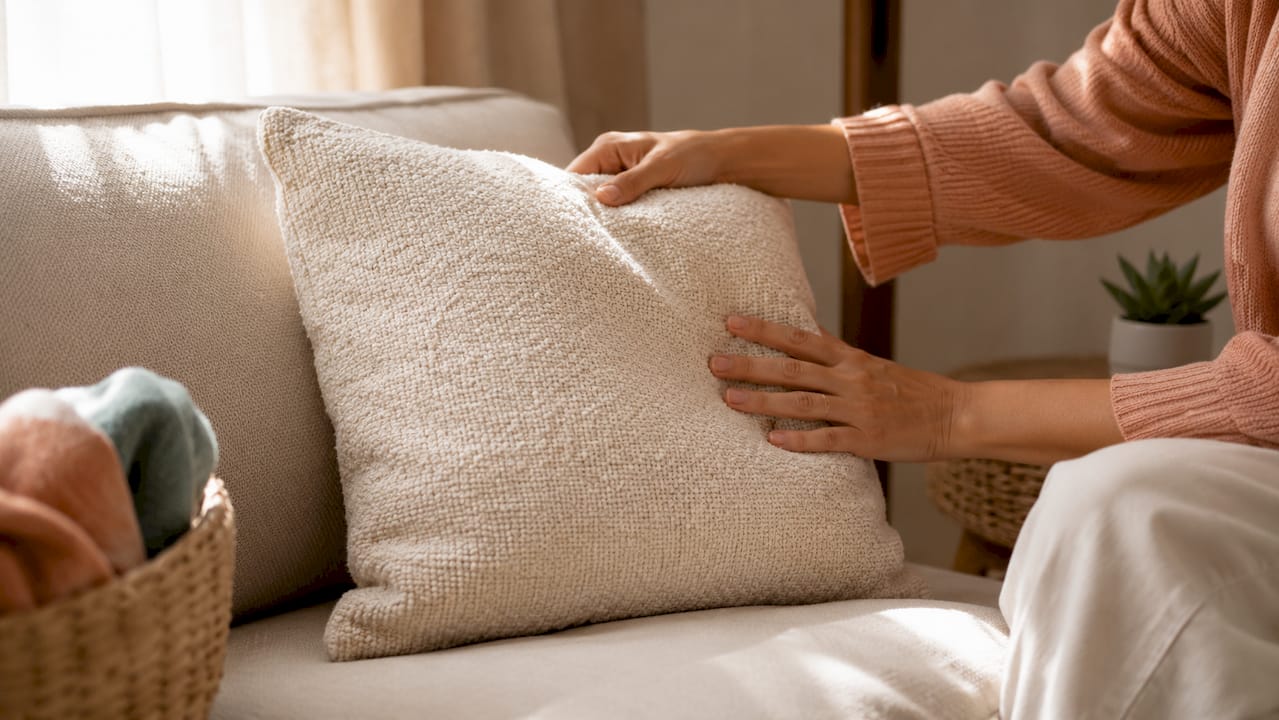
The honest tradeoff is maintenance. Feather cushions require daily plumping to maintain their loft and appearance. Without that routine of beating and turning, they flatten quickly regardless of down quality. Allergy sufferers may also react to feather content, making synthetic alternatives a more practical choice.
Pros:
- Genuinely luxurious, body-conforming softness
- Elegant, relaxed silhouette that suits heritage and casual aesthetics
- Higher down ratios (above 50% down) produce a noticeably softer, more resilient cushion
Cons:
- Requires daily plumping to prevent flattening
- May trigger allergies in sensitive households
- Feathers can poke through fabric casings over time
- Tends to compress and may need professional refilling after several years
Foam filling: structure, support, and longevity
Foam is the workhorse of modern sofa cushions, and for good reason. It holds its shape, requires minimal daily attention, and offers predictable, consistent support every time you sit down. High-resilience foam prevents “bottoming out” and makes standing up from a deep sofa noticeably easier, which matters for older adults and anyone with back concerns.
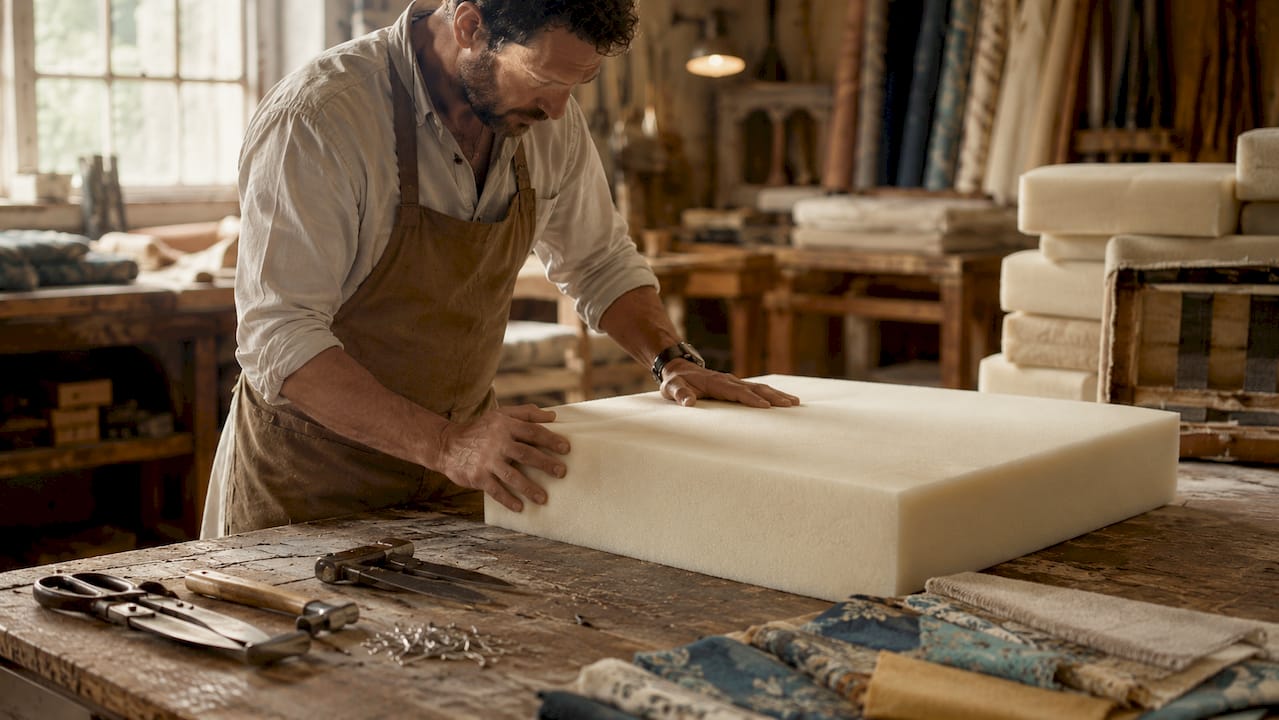
Density is the number that separates a foam cushion that lasts a decade from one that sags within two years. Premium cushion foam starts at 2.8 lb/ft³ to resist compression under daily use. Foam in the 1.8–2.5 lb range typically holds up well for 7–10 years of daily sitting, while anything below a certain low-density threshold tends to sag noticeably within a couple of years.
Pros:
- Firm, consistent support with excellent shape retention
- Low maintenance: occasional rotation is usually sufficient
- High-density grades resist sagging for years of daily family use
- Ideal for households with children, elderly members, or heavy daily use
Cons:
- Can feel rigid compared to feather or fiber fills
- Lower-density foam degrades quickly and gives a false sense of quality at first
- Does not mold to the body the way feather or memory foam does
Pro Tip: When shopping, ask for the foam density specification in lb/ft³. A retailer who cannot answer that question is likely selling lower-grade foam.
Synthetic fiber filling: soft, affordable, and short-lived
Synthetic fiber, usually polyester fiberfill, offers a plush, lightweight feel at a price point that suits budget-conscious shoppers. It’s hypoallergenic and inexpensive, making it a sensible choice for back cushions, guest room sofas, or occasional-use seating where deep structural support is less critical.
The limitation is longevity. Fiber compresses faster than foam and tends to clump or shift unevenly with regular use, requiring frequent fluffing to maintain appearance. Down-alternative fills, a refined version of synthetic fiber, offer a better balance of shape retention and softness for allergy-prone households, though they don’t fully replicate the feel of real down.
Pros:
- Soft, plush feel that many find inviting for casual lounging
- Hypoallergenic and widely available
- More affordable than foam or feather options
Cons:
- Compresses and flattens faster than foam or feather
- Can develop lumpy or uneven spots if fill migrates
- Shorter lifespan, particularly in heavily used seat cushions
- Quality varies widely; premium fiber maintains loft better than budget alternatives
Softness, maintenance, and the hybrid advantage
Comfort is personal. Some people want to sink into a cushion like a warm embrace; others prefer the firm, upright support that keeps their posture honest through a long evening. Neither preference is wrong, but matching your fill to your habits prevents a lot of buyer’s regret.
Hybrid cushions, a foam core wrapped in fiber or feather batting, are often the most practical answer for households that want both. The foam provides structure and shape retention; the wrap softens the surface feel and adds that inviting, slightly yielding quality. A foam core with an outer batting wrap defines premium sofa cushion quality, affecting both softness and durability in ways that a single-material fill rarely achieves.
Feather cushions need daily plumping, including beating and turning, to preserve their loft. Foam cushions benefit from occasional rotation to distribute wear evenly. Fiber cushions need reshaping after use to prevent permanent flat spots. Hybrid cushions generally land in the moderate-maintenance category, which suits most households well.
Pro Tip: Pay attention to cushion “crown,” the slight dome shape a well-made cushion holds when unoccupied. A cushion that sits flat before anyone sits on it has either insufficient fill or a poorly constructed wrap layer. Crown is a quiet signal of cushion construction quality.
How long does each fill type actually last?
Durability varies considerably across fill types, and the gap between a well-chosen fill and a poorly chosen one is measured in years, not months.
| Fill Type | Typical Lifespan (Daily Use) | Maintenance Level |
|---|---|---|
| HR Foam (higher density) | long-lasting | Low |
| Standard Foam (lower density) | shorter lifespan | Low, but flattens fast |
| Feather and Down | moderate lifespan with regular fluffing | High |
| Synthetic Fiberfill | shorter lifespan | Moderate to high |
| Memory Foam | mid-range lifespan | Low |
| Down-Alternative | moderate lifespan | Moderate |
Sagging cushions are often misread as a frame problem. In most cases, the culprit is low-density foam that has lost its resilience, and replacing the foam core can fully restore the cushion’s performance. If the frame is structurally sound, foam replacement is almost always the more economical path compared to buying new furniture.
How cushion fill shapes your comfort and support
The fill material determines far more than softness. It controls how your body weight distributes across the seat, how much your posture shifts during a long sit, and whether standing up feels effortless or like a small athletic event.
Firmer, high-density foam resists compression, keeping you positioned rather than slowly sinking. That resistance is genuinely beneficial for back support and for anyone who spends long stretches seated. Softer fills, feather and fiber especially, compress more readily and create an enveloping sensation that reduces pressure points but provides less structural support. The sofa fabric’s role in how a cushion feels is also worth considering, since a tightly woven upholstery fabric over a firm foam core feels different from a loosely woven one over the same fill.
For households with elderly members or anyone with back concerns, high-resilience foam or a quality hybrid is usually the more thoughtful choice. For a reading nook or a guest room sofa that sees lighter use, a feather or fiber fill can deliver that hotel-lobby plushness without the durability demands of a daily-use seat.
Sustainability and the environment: what’s inside your cushions matters
The environmental footprint of cushion fill is a growing consideration for homeowners who care about where their furniture comes from and where it ends up.
Polyurethane foam, the most common fill, is petroleum-derived and not biodegradable. Some manufacturers now offer plant-based or soy-based foam alternatives that reduce reliance on petrochemicals, though availability varies. Certifications like CertiPUR-US indicate that a foam has been tested for harmful emissions and chemical content, which is a meaningful baseline for indoor air quality.
Feather and down fills are natural and biodegradable, but their ethical sourcing is worth scrutinizing. Responsibly sourced down carries certifications such as the Responsible Down Standard (RDS), which verifies that birds were not live-plucked or force-fed. Synthetic fiber fills are petroleum-based like foam, though recycled polyester options are increasingly available and represent a more circular approach to cushion materials.
At Marigold Furniture, responsibly sourced materials are a foundational commitment, not an afterthought. Every handcrafted sofa, from the Seville Tufted-Back Floral Sofa to the Florence Arched Floral Sofa and the Avignon Floral Sofa, is benchmade in Dallas and Los Angeles with materials chosen for both beauty and longevity. When a sofa is built to last, the environmental calculus shifts in your favor from the very first day.
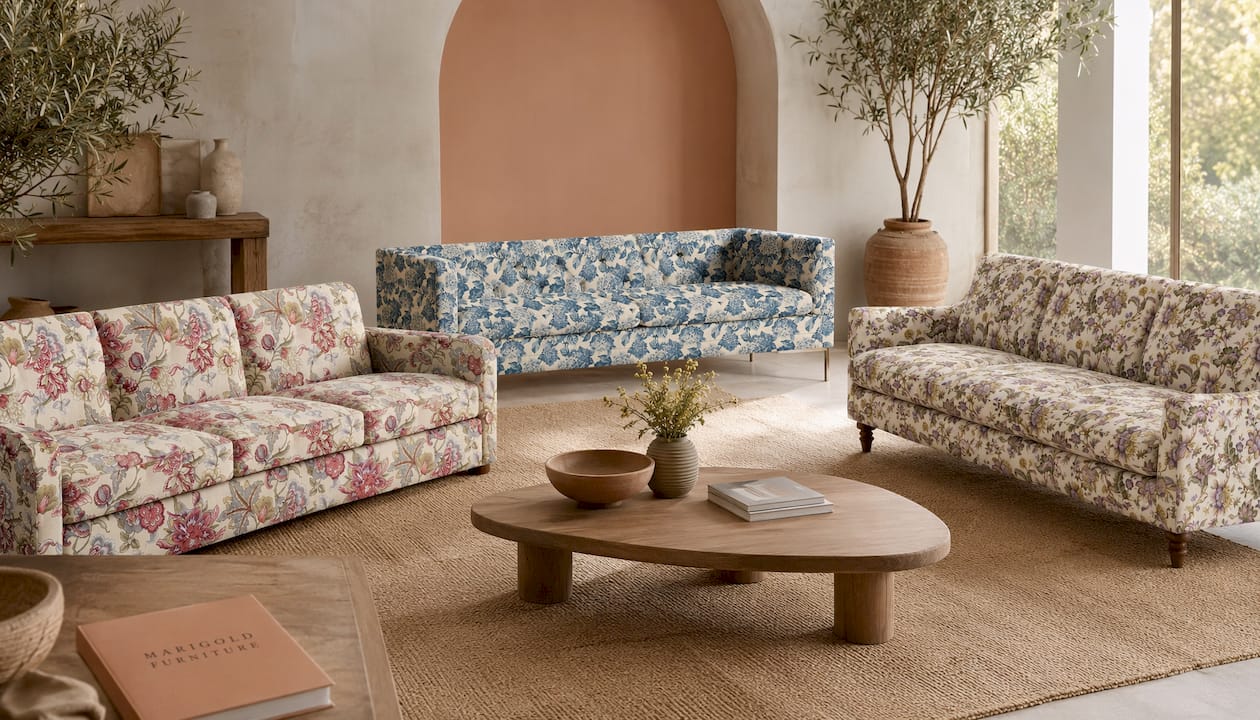
Choosing a sofa with quality cushion fill is one of the most enduring decisions you’ll make for your home. Marigold Furniture’s made-to-order pieces arrive in 4–6 weeks, crafted with the care and material integrity that keeps them beloved companions for years to come.
Key Takeaways
High-resilience foam at 1.8 lb/ft³ or higher offers the best combination of durability, low maintenance, and consistent support for daily-use sofas, while feather and hybrid fills suit those who prioritize softness and are willing to invest in upkeep.
| Point | Details |
|---|---|
| Foam density determines lifespan | HR foam at 1.8 lb/ft³ or higher lasts 7–10 years; foam below 1.5 lb/ft³ sags within 1–3 years. |
| Feather fill demands daily care | Feather cushions require daily plumping to maintain loft, regardless of down quality. |
| Hybrids offer the best balance | A foam core with an outer batting wrap delivers both structure and surface softness. |
| Sustainability requires scrutiny | Look for CertiPUR-US foam and Responsible Down Standard certification for ethical sourcing. |
| Sagging is usually a fill problem | Most cushion sagging comes from compressed foam, not frame failure; replacing the core restores performance. |