

Sofa fabric swatches are small sample pieces of upholstery fabric that let you test color, texture, and durability before committing to a full purchase. This sofa fabric swatches selection guide exists because choosing fabric from a screen or a showroom floor is one of the most reliable ways to end up with a sofa you regret. The right swatch process covers fabric type, Martindale rub count, lighting conditions, and lifestyle fit. Marigold Furniture, which handcrafts floral sofas in Dallas and Los Angeles, offers over 20 chintz and floral fabric choices precisely because fabric selection deserves that kind of range and care.
What are the most common sofa fabric types and how do they affect your choice?
Fabric type is the single biggest factor in how your sofa looks, feels, and holds up over time. Each fabric family brings a distinct character to a room, and understanding those differences saves you from costly surprises.
Plain weave fabrics like linen and cotton are breathable, crisp, and natural looking. They suit formal sitting rooms or spaces with low daily traffic. Pure linen is beautiful but marks easily and wrinkles with regular use, so it rewards homeowners who treat their sofa more as a design statement than a daily perch.
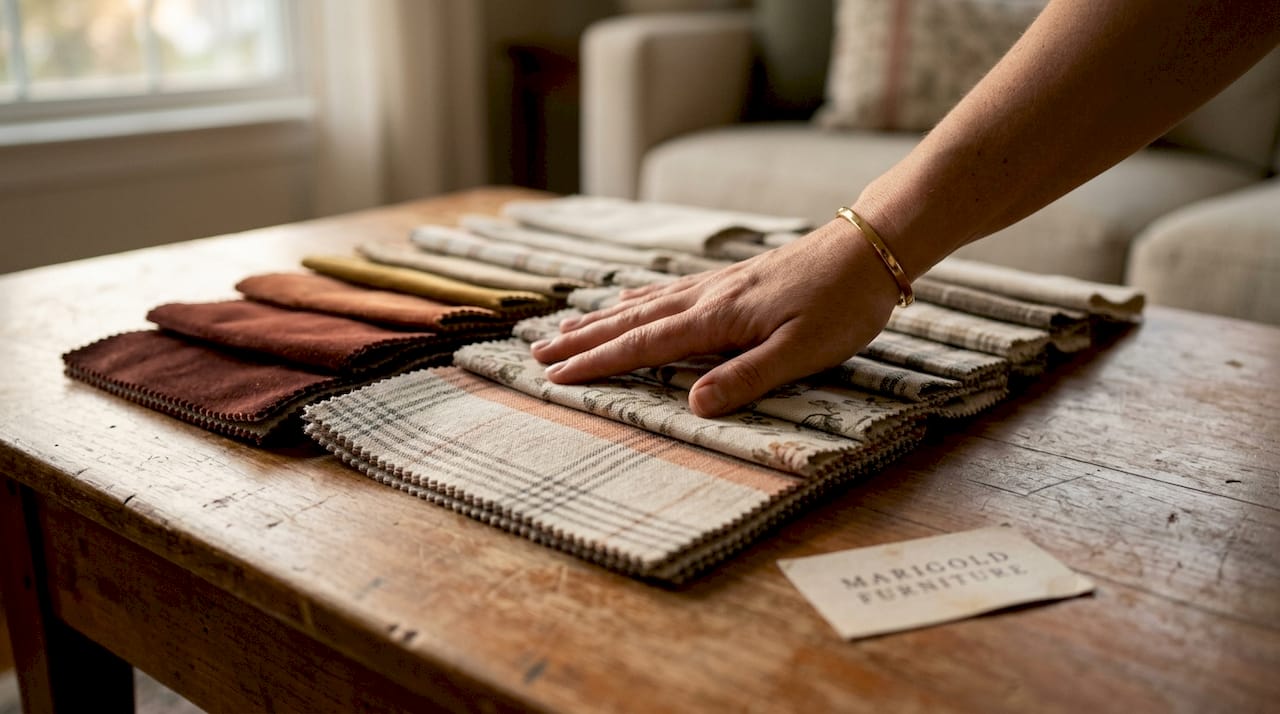
Velvet is one of the most misunderstood upholstery fabrics. The pile direction changes color dramatically, which means a velvet swatch viewed flat on a table tells you almost nothing about how it will read on a finished sofa. Velvet reads richer and deeper when the pile runs toward you, and lighter when it runs away. This is why viewing velvet swatches upright and from a distance is non-negotiable.
Chenille and boucle offer soft, textured surfaces that photograph beautifully and feel wonderful underfoot. Both are mid-weight fabrics that work well in everyday living rooms. Boucle in particular has become a signature of warm, organic interiors, pairing naturally with luxury floral fabric examples in layered, heritage-inspired rooms.
Performance fabrics have changed the upholstery market. Technologies like solution-dyed acrylic and treatments such as Aquaclean resist stains and wear far better than untreated natural fibers. For households with children or pets, performance fabric is not a compromise. It is the practical choice that lets you keep a beautiful sofa looking beautiful.
- Linen and cotton: Elegant, breathable, best for low-traffic rooms
- Velvet: Rich and dramatic, sensitive to pile direction and light
- Chenille and boucle: Soft, textured, forgiving in everyday use
- Chintz: Tightly woven, often floral-printed, durable and crisp
- Performance fabrics: Stain-resistant, easy-clean, ideal for active households
Pro Tip: When selecting fabric for a sofa that will anchor a busy family room, pair a performance base fabric with a floral or patterned top cushion cover. You get the beauty of a printed textile with the practicality of an easy-clean foundation.
How to test sofa fabric swatches effectively at home
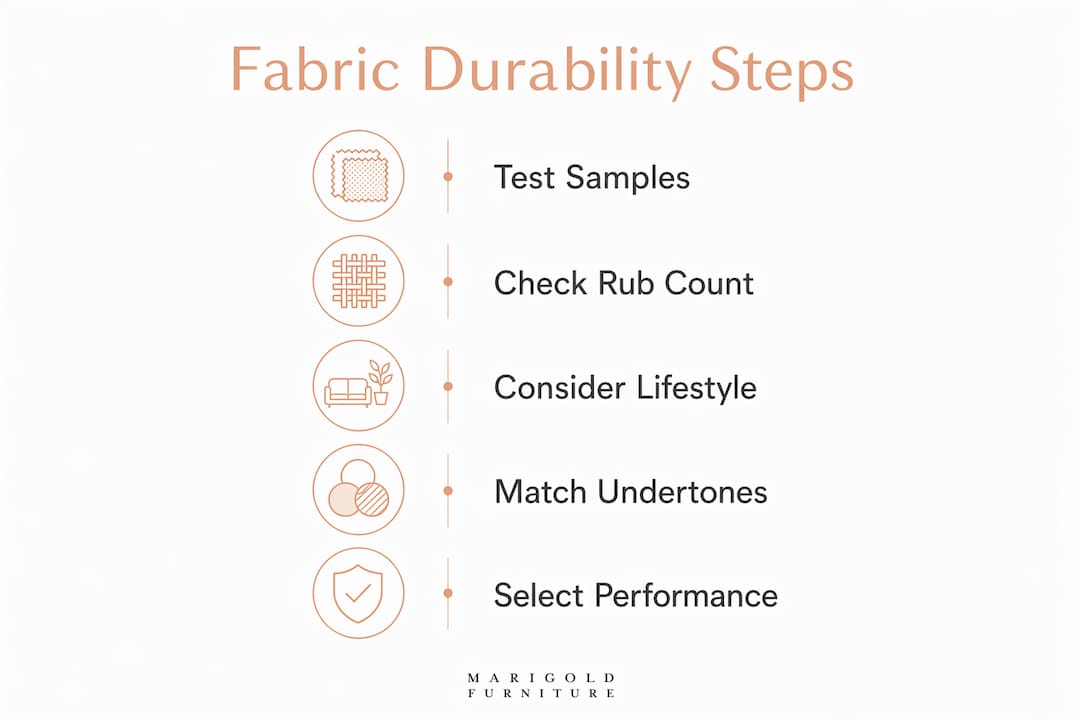
Testing swatches at home is not optional. It is the step that separates a confident purchase from an expensive guess. The process is straightforward when you follow a clear sequence.
-
Place swatches in the actual room. Set each swatch on or near the spot where the sofa will sit. Lighting varies dramatically between rooms, and a fabric that glows in a south-facing showroom can look flat in a north-facing living room.
-
Test at three times of day. Morning light runs cooler, midday light is neutral, and late afternoon light shifts warm and golden. A fabric that reads as a clean ivory at noon can read as cream or even blush by 5:00 PM.
-
Step back to 6–10 feet. Viewing swatches from normal sofa distance reveals how pattern scale and texture actually read in the room. Viewing from 12 inches misrepresents both.
-
Run a spill test. Drip a small amount of water on the swatch and observe how quickly it absorbs. For fabrics marketed as stain-resistant, test with a drop of diluted coffee or tea.
-
Do a scratch test. Drag a fingernail lightly across the surface. Fabrics that pill or snag immediately under light pressure will not survive a household with pets or active children.
-
Order 3–5 swatches in the same color family. Undertone differences between fabrics labeled “sage” or “dusty blue” can be significant. Placing them side by side against your wall color reveals which undertone actually works.
-
Do the touch test last. Tactile comfort matters more than most homeowners expect. A fabric you will lounge on for hours needs to feel good against skin, not just look good in a photograph.
Pro Tip: Place a white piece of paper next to your swatches when testing in natural light. It acts as a neutral reference point and makes undertone shifts far easier to see.
How to evaluate fabric durability for your lifestyle
Durability is a lifestyle decision, not just a number on a label. The Martindale rub count is the industry standard for measuring fabric abrasion resistance. It counts how many times a fabric can be rubbed before it shows wear.
The Martindale scale breaks down as follows:
| Use Category | Martindale Rub Count | Best For |
|---|---|---|
| Decorative only | Under 15,000 | Display pieces, low-use rooms |
| Light domestic | 15,000–25,000 | Formal sitting rooms, adult-only homes |
| General domestic | 25,000–40,000 | Everyday family sofas |
| Heavy domestic | 40,000+ | Households with children, pets, or high traffic |
A sofa used daily by a family with two children and a dog needs a fabric rated at 25,000 rubs or higher. Choosing a 12,000-rub linen because it photographs beautifully is a decision you will feel within two years.
Beyond the rub count, consider these durability factors:
- Color depth: Mid-toned fabrics hide everyday wear and minor staining better than very light or very dark solids.
- Texture: Textured weaves like tweed or boucle disguise surface marks that would show clearly on a flat, solid fabric.
- Pattern scale: A fabric’s pattern repeat affects both yardage cost and how the design reads across the full sofa. A large floral repeat that looks stunning on a swatch can require significantly more fabric to match at seams.
- Fiber content: Synthetic blends generally outperform pure natural fibers in abrasion resistance. A cotton-polyester blend often delivers both comfort and durability.
Matching undertones rather than color names is the other durability-adjacent decision most homeowners overlook. A fabric with a warm undertone placed against a cool-toned wall will always look slightly off, no matter how well it performs on the Martindale scale.
What are the most common mistakes when choosing sofa fabric swatches?
The most common mistake is finalizing a fabric choice based on a screen image or showroom lighting. Showroom and screen colors are controlled environments designed to make fabrics look their best. Your living room is not a showroom.
Other frequent errors include:
- Viewing swatches too close. A swatch held at arm’s length looks nothing like a full sofa viewed from across the room. Always test from 6–10 feet.
- Ignoring pattern scale. A small floral print on a 4-inch swatch can become an overwhelming repeat on a 90-inch sofa. Request the largest swatch available for patterned fabrics.
- Skipping the touch test. A fabric that feels scratchy on your wrist will feel scratchy every time you sit down. Comfort is not a secondary consideration.
- Choosing fabric before assessing the room. Fabric and furniture work together. The scale of the sofa, the height of the ceiling, and the color of the walls all affect how a fabric reads.
- Ignoring lifestyle needs. Choosing a delicate fabric for a room that functions as a family gathering space is a mismatch that no amount of careful color matching will fix. Durable sofa fabrics for young families require honest self-assessment before aesthetic decisions.
“The single most expensive mistake in upholstery selection is choosing fabric you love in isolation and discovering it wrong in context. Test it in your room, in your light, against your walls, and at the distance you actually sit from it.”
Key Takeaways
Fabric selection done right means testing swatches in your actual room, at multiple times of day, from a realistic viewing distance, and against your lifestyle’s real demands.
| Point | Details |
|---|---|
| Test in real conditions | Place swatches in the sofa’s room and evaluate at morning, midday, and late afternoon light. |
| Use the Martindale scale | Choose fabrics rated 25,000+ rubs for family sofas; 40,000+ for heavy daily use with pets or children. |
| Order multiple swatches | Request 3–5 swatches in the same color family to compare undertones before committing. |
| Match fabric to lifestyle | Performance fabrics suit active households; delicate weaves like pure linen suit low-traffic, adult-only rooms. |
| Never skip the touch test | Tactile comfort determines daily satisfaction as much as color or pattern does. |
What I’ve learned from years of watching homeowners choose the wrong fabric
I have seen homeowners spend months selecting the perfect floral print, order the sofa, and then feel a quiet disappointment the moment it arrives. Almost every time, the problem traces back to the same root cause. They fell in love with a swatch in isolation and never tested it in the room where it would actually live.
The advice I give every time is simple. Spend at least three days with your swatches before making a final decision. Pin them to the wall near where the sofa will sit. Look at them when you wake up, at noon, and after dinner with the lamps on. You will see things on day three that you completely missed on day one.
The other thing I believe strongly is that beauty and durability are not opposites. A well-chosen floral chintz sofa in a tightly woven, high-rub-count fabric can be both the most beautiful and the most practical piece in a room. The mistake is treating those two qualities as a trade-off rather than a design goal.
Fabric choice is also deeply personal. Your sofa is not a neutral backdrop. It is a statement about how you live, what you love, and what kind of home you want to come back to every day. That deserves more than a five-second decision based on a thumbnail image.
— Kevin O’Gara
Marigold Furniture’s custom floral sofas, ready for your swatch test
Marigold Furniture handcrafts each sofa to order in Dallas and Los Angeles, with a 4–6 week delivery window that reflects genuine benchmade quality rather than warehouse inventory. Every sofa is available in over 20 chintz and floral fabric options, and fabric swatches can be ordered before you commit to a full piece.
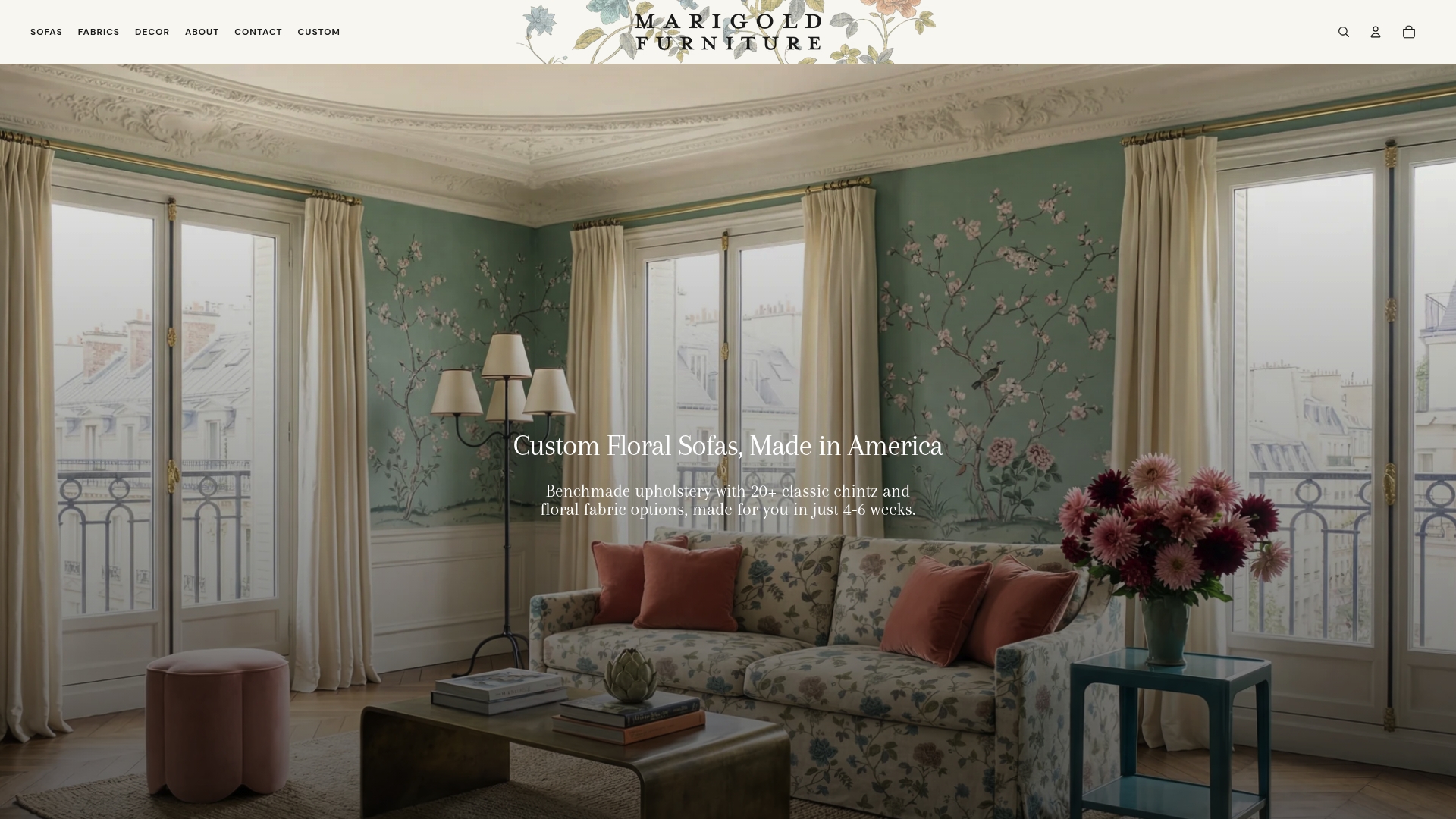
The Florence Arched Floral Sofa and the Boboli Green and Purple Floral fabric are two of the most requested starting points for homeowners who want to test a swatch in their room before placing a custom order. Marigold’s responsibly sourced materials and artisan construction mean the fabric you test is the fabric you receive. Request your swatches, live with them for a few days, and let the light in your home make the final call.
FAQ
What are sofa fabric swatches and why do I need them?
Sofa fabric swatches are small sample pieces of upholstery fabric that let you test color, texture, and durability in your home before purchasing. They are the most reliable way to avoid a mismatch between what a fabric looks like online and how it reads in your actual room.
How many swatches should I order before choosing a sofa fabric?
Order 3–5 swatches in the same color family to compare undertones accurately. Viewing multiple options side by side in your room’s natural light reveals differences that a single swatch cannot show.
What Martindale rub count do I need for a family sofa?
Family sofas need a Martindale rub count of at least 25,000. Households with children or pets should look for 40,000 or higher for long-term durability.
Are performance fabrics as attractive as natural fibers?
Performance fabrics have advanced significantly and now include richly printed, textured options that rival natural fibers in appearance. They offer stain resistance and easy cleaning without sacrificing the visual warmth of a well-designed upholstery fabric.
How do I avoid choosing the wrong sofa fabric color?
Test swatches in the room at three times of day and from 6–10 feet away. Matching undertones rather than color names is the most reliable method for achieving a color that works with your walls, floors, and existing furnishings.
Recommended
- Family-Friendly Upholstery Fabric Types: 2026 Guide – Marigold Furniture
- Chintz Fabric Sofas: A Buyer’s Guide to Getting One Right the First Ti – Marigold Furniture
- Chintz vs Velvet Upholstery: Which Fabric Belongs on Your Sofa? – Marigold Furniture
- Upholstery Grade Fabric: What It Is and How to Choose – Marigold Furniture