

The custom sofa ordering process is the structured method buyers use to specify, produce, and inspect a made-to-order sofa that fits their exact dimensions, comfort needs, and design vision. Done well, it delivers a piece of furniture that a mass-produced catalog can never match. Done poorly, it produces an expensive disappointment. The difference comes down to preparation: a complete specification sheet, clear communication with your maker, and a disciplined quality inspection before the sofa ever enters your home. Marigold Furniture builds every sofa to this standard, and the steps below reflect what that process actually looks like from start to finish.
What specifications and measurements are essential before ordering a custom sofa?
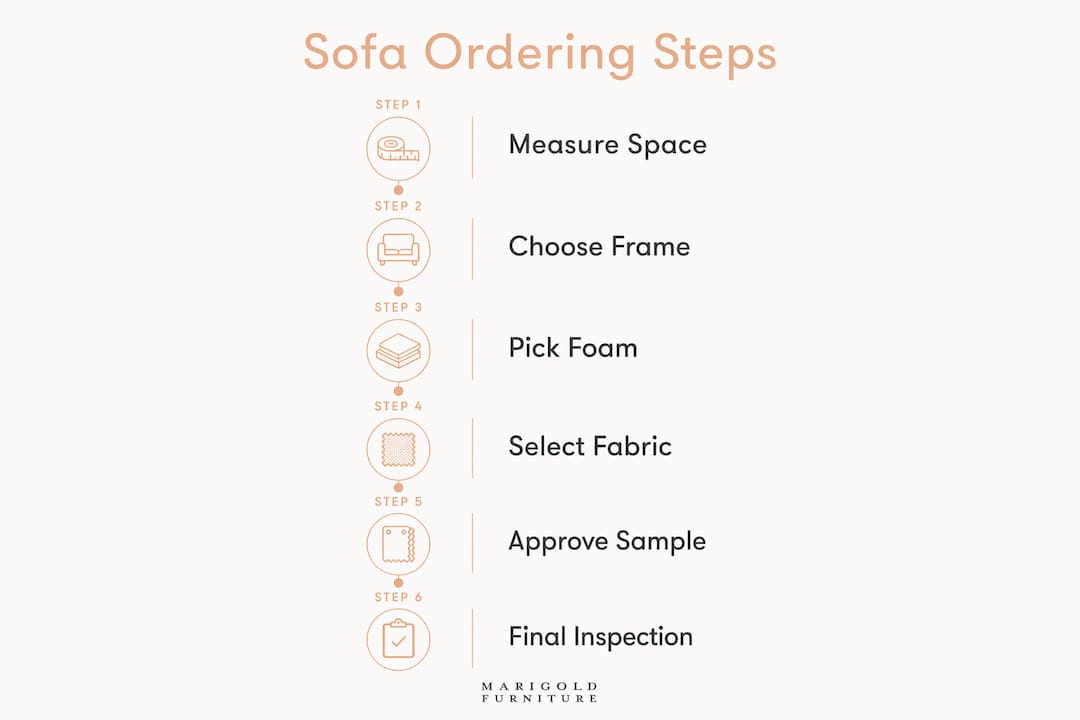
A complete specification sheet is the foundation of every successful custom order. Without it, factories fill in the blanks themselves, and their defaults rarely match your expectations. Specifications like width, depth, height, seat height, arm height, cushion thickness, and frame material must all be documented before production begins.
Start with the six critical dimensions:
- Overall width: Measure the wall or space the sofa will occupy, then subtract at least 6 inches for clearance on each side.
- Overall depth: Standard sofas run 32–38 inches deep. A shallower depth suits smaller rooms; a deeper seat rewards lounging.
- Seat height: The distance from the floor to the top of the cushion. 17–19 inches works for most adults; go lower for a relaxed, modern feel.
- Arm height: Determines whether the sofa reads as formal or casual and affects how it pairs with side tables.
- Cushion thickness: Thicker cushions feel plush at first but compress faster. Specify the finished thickness, not the raw foam block size.
- Back height: A high back offers more support; a low back reads lighter in a room.
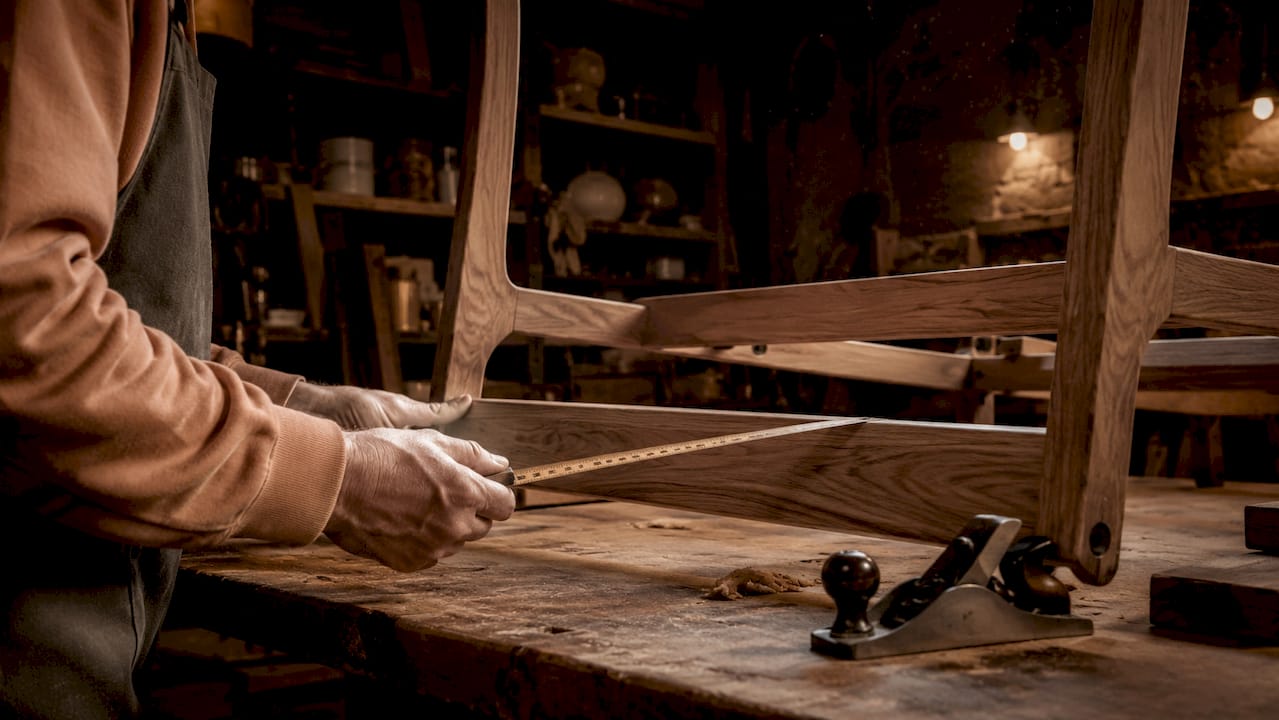
Frame material deserves equal attention. Kiln-dried hardwood frames resist warping and cracking far better than green wood or engineered alternatives. Specify it explicitly, because factories may substitute lower-cost materials unless the brief prevents it.
Foam density and back fill type are the two comfort variables buyers most often overlook. Specifying foam ILD and back fill composition controls long-term support and prevents the factory from defaulting to low-resilience materials that slouch within a year. Back fill options include high-density foam, fiber wrap, feather blend, or a combination. Each produces a different feel and a different maintenance routine.
Upholstery fabric is the final specification layer. For family living rooms, family-friendly upholstery fabric types vary widely in durability, cleanability, and visual weight. Chintz, linen, velvet, and performance weaves each behave differently under daily use. Choose based on your household’s actual habits, not just the swatch in good lighting.
Pro Tip: Compile all specifications into a single technical brief document before contacting any maker. A strong technical brief facilitates communication across design, costing, sampling, production, and quality control teams, which improves both delivery speed and final quality.
How does the production and building phase of a custom sofa work?
Once your specification sheet is approved, the factory moves through a defined sequence of steps. Understanding that sequence helps you ask the right questions and catch problems early.
- Technical review. The factory’s production team reads your brief and flags any conflicts or missing details. This is the moment to resolve ambiguities, not after the frame is built. Respond quickly to queries at this stage.
- Pre-production sample. For most custom orders, the factory builds a sample or mock-up of key components, often the seat cushion, arm profile, or a fabric swatch panel. Sample rounds validate factory interpretation of specifications and allow you to correct issues before full production begins. Never skip this step.
- Frame construction. Craftspeople cut, join, and reinforce the frame. A quality frame uses corner blocks and double-dowel joinery at stress points. Ask for photos if you cannot inspect in person.
- Spring and webbing installation. Eight-way hand-tied coil springs offer the most durable support. Sinuous springs cost less and perform adequately for lighter use. Your brief should specify which system you want.
- Upholstery application. Fabric is cut, aligned, and pulled tight over the frame and padding. Pattern alignment at seams requires skilled hands and extra yardage. Budget for that extra fabric if your chosen textile has a repeat.
- Cushion filling. Cushions are filled to the specified ILD and back fill composition, then fitted to their covers. This is the last point where comfort adjustments are practical before final assembly.
- Final assembly and cleaning. All components come together. Loose threads are removed, fabric tension is checked, and the piece is prepared for inspection.
A typical lead time for custom sofa production runs 6–10 weeks depending on materials and factory location. Delays happen most often during sampling and shipping. Build a two-week buffer into your project timeline and communicate your delivery deadline clearly in the original brief.
Clear communication about packaging, labeling, and shipping expectations prevents costly errors at the end of the process. Include your preferred packing method and any private label requirements in the original brief, not as an afterthought after production is complete.
What to expect during final quality inspection and delivery readiness?
Final inspection is where the custom sofa ordering checklist pays off. A thorough review before delivery removes defects, confirms fabric tension, and gives you documented evidence if a dispute arises later.
Work through these benchmarks in order:
- Frame stability. Sit on every seat position and rock gently side to side. A quality frame produces no noise, no flex, and no movement at the joints.
- Cushion recovery. Press each cushion fully down, then release. It should return to shape within a few seconds. Slow recovery signals low-density foam.
- Seam straightness. Run your eye along every seam from arm to arm. Straight, even stitching indicates skilled upholstery work. Wavy seams indicate rushed cutting or poor tension.
- Pattern alignment. On florals and prints, check that the pattern matches across cushion seams and at the front of the sofa. Misaligned patterns are a permanent defect.
- Fabric tension. Look for puckering, sagging, or pulling at corners and arm fronts. These rarely improve with use.
- Hidden workmanship. Lift cushions and inspect the deck fabric and spring system. Quality benchmarks include cushion recovery and checking for noise or movement to confirm durability beyond what the eye can see.
Pro Tip: Photograph every defect you find during inspection, with a ruler or coin for scale. Written descriptions alone are hard to dispute; photos with measurements are not.
The table below shows which defects are correctable before delivery and which signal a deeper construction problem.
| Defect | Correctable before delivery | Signals deeper issue |
|---|---|---|
| Loose thread or surface lint | Yes | No |
| Wavy seam stitching | Rarely | Yes, poor upholstery skill |
| Cushion slow to recover | No | Yes, wrong foam density |
| Frame noise under weight | No | Yes, joint or spring failure |
| Pattern misalignment at seam | No | Yes, poor cutting and layout |
Final stages include removing threads, verifying symmetry, and testing under realistic conditions before the sofa leaves the workshop. Treat this walkthrough as non-negotiable, not a courtesy.
Common mistakes and troubleshooting in the custom sofa ordering process
Most custom sofa problems trace back to one of three root causes: an incomplete brief, a skipped sample round, or an unchecked final inspection. Common mistakes include skipping specification details and lack of inspection, which cause rocking frames, seam failures, and fabric wrinkles that appear within months of delivery.
The most frequent pitfalls are:
- Vague fabric descriptions. “Blue floral linen” is not a specification. Provide the fabric name, colorway, supplier reference, and repeat measurement.
- Missing comfort parameters. Leaving foam ILD and back fill unspecified invites the factory to choose the cheapest option available.
- Accepting the first sample without written sign-off. Verbal approval is unenforceable. Always confirm sample approval in writing before authorizing full production.
- Ignoring lead time buffers. Ordering a sofa for a specific event date without a buffer is the fastest way to arrive at that date without a sofa.
- Skipping the final inspection. Buyers who waive inspection to save time or shipping costs often discover defects only after the sofa is in their home, where remediation is far more expensive.
When disputes arise, the fastest resolution comes from matching the visible symptom to its documented root cause. A rocking frame traces to joint construction. A slouching cushion traces to foam density. Seam failure traces to thread tension or stitch count. Understanding the linkage between symptoms and root causes helps resolve supplier disagreements faster and with less friction.
Proactive communication throughout production, not just at the start and end, keeps small issues from becoming expensive ones. Check in at the frame stage, at upholstery, and at cushion filling. A brief photo update from the factory at each stage costs nothing and catches problems while they are still fixable.
Key Takeaways
A successful custom sofa order depends on a complete specification sheet, a signed sample approval, and a structured quality inspection before delivery.
| Point | Details |
|---|---|
| Specification sheet first | Document all six dimensions, frame material, foam ILD, and fabric reference before contacting any maker. |
| Sign off on samples in writing | Written sample approval is the only enforceable record if production deviates from your brief. |
| Inspect hidden workmanship | Check frame joints, spring systems, and cushion recovery, not just visible fabric and seams. |
| Build a timeline buffer | Custom production runs 6–10 weeks; add two weeks for sampling delays and shipping variables. |
| Match defects to root causes | Linking symptoms to construction causes speeds up dispute resolution and prevents repeat errors. |
What I’ve learned from years of watching custom sofas go wrong
The single most common failure I see is not a craftsmanship problem. It is a communication problem. Buyers arrive with a beautiful image saved on their phone and a vague sense of what they want, and they hand that to a maker without a written brief. The maker does their best. The buyer gets something close but not right. Then everyone is frustrated, and no one is technically wrong.
Thinking like a furniture designer means working sequentially: dimensions first, then comfort feel, then materials. Most buyers do it backwards. They fall in love with a fabric, then try to build a sofa around it, and they never stop to ask whether the seat height suits their body or whether the depth fits the room.
The other thing I have seen repeatedly is buyers undervaluing the sample round. I understand the impulse. Samples take time, and time feels like delay. But every hour spent reviewing a sample is worth ten hours of post-delivery remediation. The luxury custom sofa design elements that make a piece feel genuinely special, the kiln-dried frame, the hand-tied springs, the pattern-matched florals, none of those survive a rushed production process. They require deliberate specification and patient review.
My honest advice: treat the brief as a contract, treat the sample as a test, and treat the final inspection as your last line of defense. A sofa built to a thorough specification is a beloved companion for decades. One built to a vague verbal description is a source of regret within a year.
— Kevin O’Gara
Marigold Furniture’s custom sofas, built the right way
Marigold Furniture handcrafts every sofa in Dallas and Los Angeles, using responsibly sourced materials and over 20 chintz and floral fabric choices. The benchmade process means each piece is built one at a time, to your specifications, with a 4–6 week delivery window for made-to-order pieces.
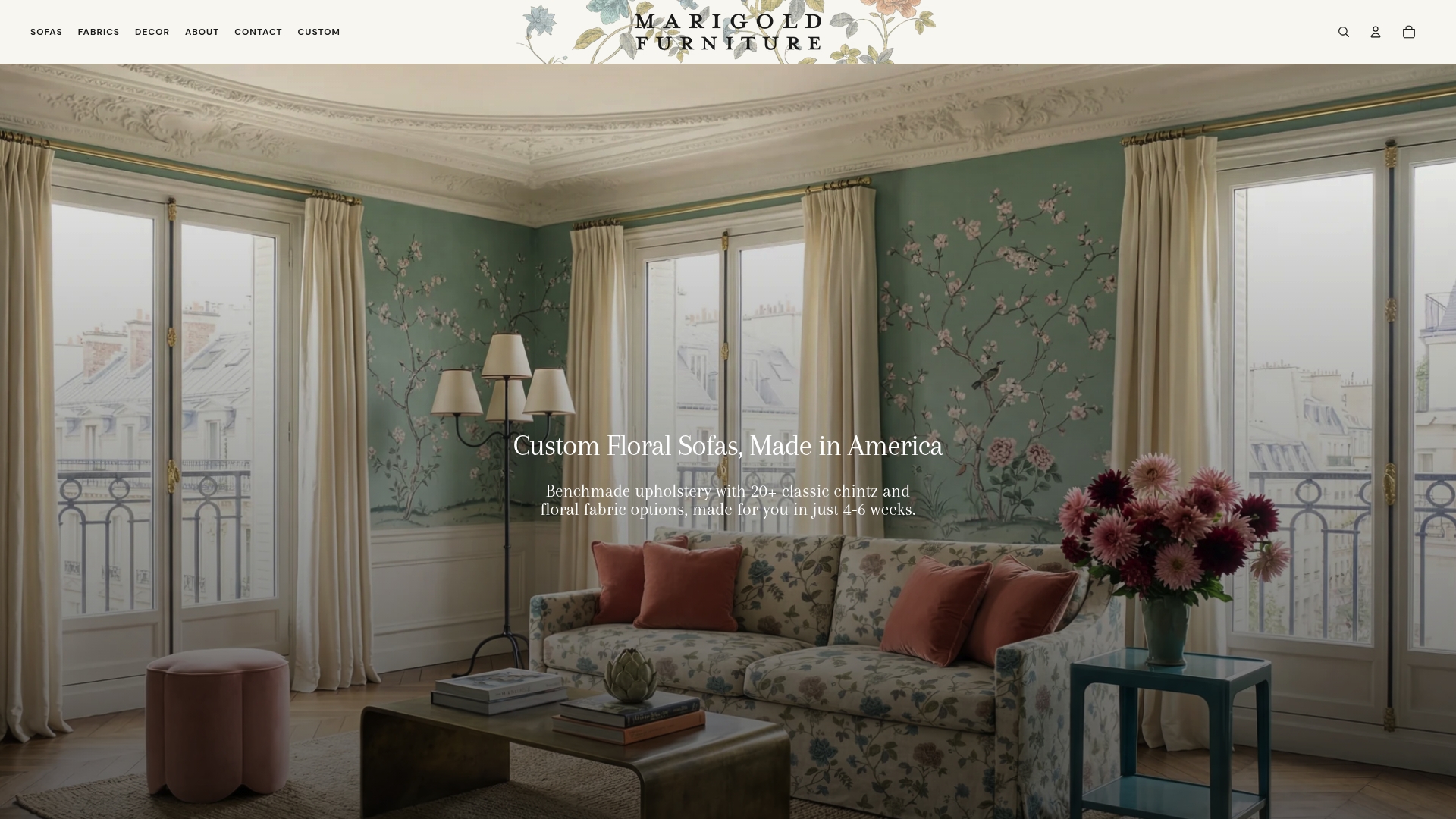
The Florence Arched Floral Sofa is one of the most requested designs, with its arched back and jewel-toned blooms anchoring living rooms with quiet confidence. The Giverny Slope-Arm Floral Sofa and the Seville Tufted-Back Floral Sofa offer equally distinctive silhouettes for buyers who want something that feels personal, not catalog-standard. Browse Marigold’s full custom floral sofa design page to see every available style and fabric option.
FAQ
What is included in a custom sofa specification sheet?
A complete specification sheet covers overall dimensions, seat height, arm height, cushion thickness, frame material, foam ILD, back fill type, and upholstery fabric reference. Every detail left unspecified becomes a factory decision made without your input.
How long does the custom sofa ordering process take?
Production typically runs 6–10 weeks, with additional time for sampling and shipping. Building a two-week buffer into your timeline protects against the most common delays.
Why does hidden workmanship matter in a custom sofa?
Hidden elements like frame joints, spring systems, and foam density determine how long a sofa lasts. A sofa can look perfect on delivery and fail structurally within a year if these components were not specified and inspected.
What should I check during a final quality inspection?
Test frame stability under weight, cushion recovery speed, seam straightness, pattern alignment at joins, and fabric tension at corners and arm fronts. Photograph any defect with a scale reference before accepting delivery.
Can I make changes after the sample is approved?
Changes after sample sign-off typically restart part of the production sequence and extend the lead time. Resolve all design and comfort questions during the sample round, then confirm approval in writing before authorizing full production.