

Pet-friendly upholstery is defined as fabric engineered to resist stains, withstand abrasion, and clean easily in homes where animals live and shed. The term is not a regulated standard. Real performance comes from fabric construction: fiber type, weave density, and integrated finishes. Industry benchmarks set a minimum of 45,000 double rubs as the durability threshold for pet households. That number means a fabric survives the equivalent of years of daily friction before showing wear. No fabric is truly pet-proof, but the right choices reduce damage and maintenance dramatically. This guide explains what actually makes upholstery stand up to pets, which materials perform best, and how to care for your furniture so it stays beautiful for years.
What is pet-friendly upholstery, really?
Pet-friendly upholstery is a performance category, not a marketing label. The “pet-friendly” label is often applied loosely by retailers, but real suitability depends entirely on how a fabric is constructed and finished. A fabric earns the designation by combining tight weave structure, synthetic or treated fibers, and stain-resistant finishes that work together to minimize claw damage, repel moisture, and release hair easily.
The industry term you will encounter alongside this concept is performance upholstery fabric. Performance fabrics are engineered at the fiber or finish level to meet specific durability and cleanability standards. When you see “pet-friendly” on a tag, ask for the double rub count and fiber content instead of taking the label at face value. Those two data points tell you far more than any marketing phrase.
Understanding this distinction protects your investment. A sofa that looks beautiful in the showroom but carries a rub count below 30,000 and a loose linen weave will show claw marks and embedded hair within months of pet use.
What makes a fabric pet-friendly: fibers, weaves, and finishes
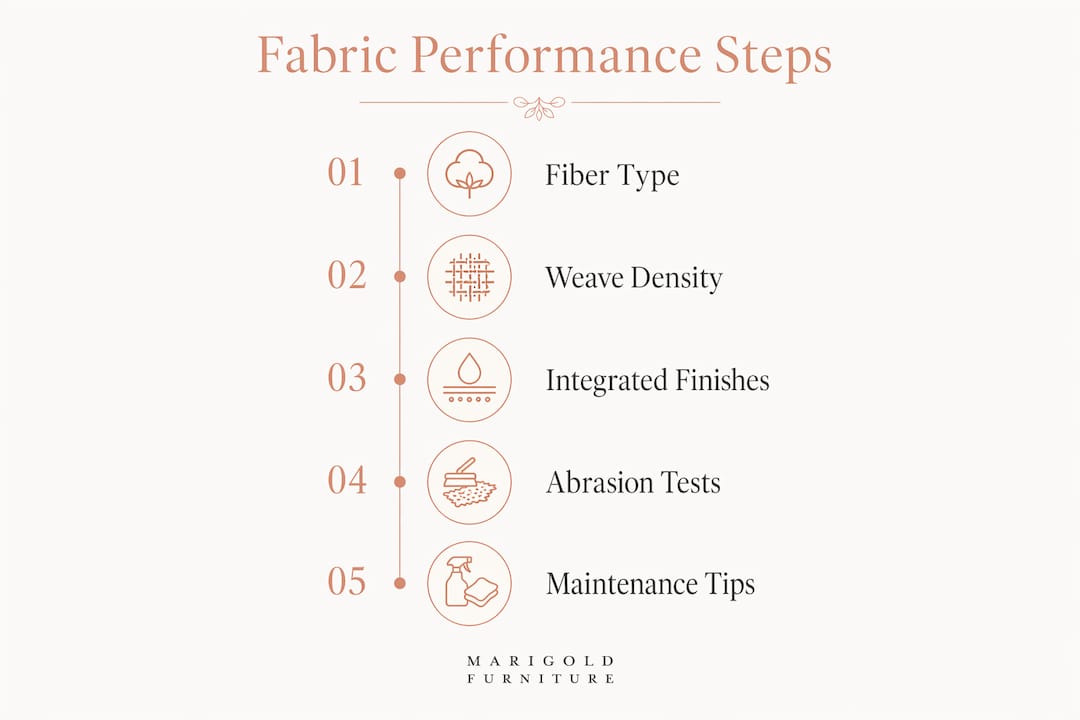
Fabric construction determines performance. Three factors matter most: fiber type, weave tightness, and whether stain resistance is built into the fiber or applied as a surface coating.
Fiber type
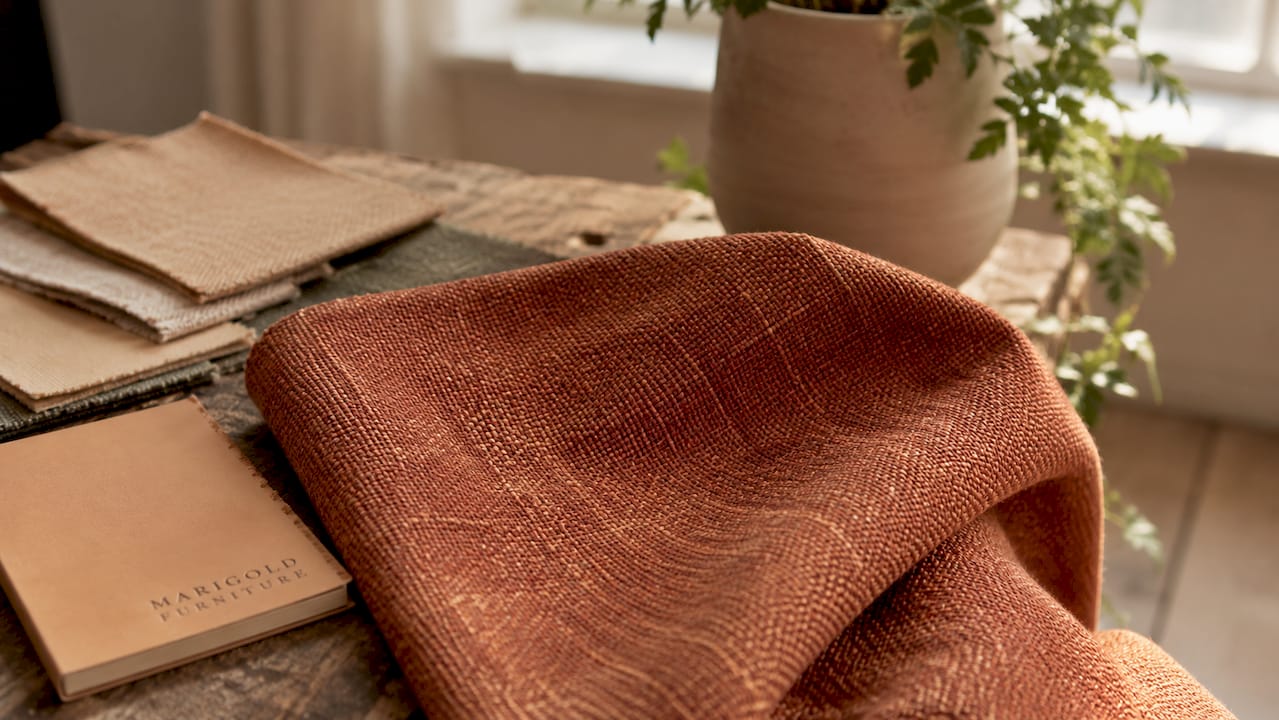
Synthetic fibers outperform natural ones in pet households. Polyester and nylon resist moisture absorption, dry quickly after accidents, and hold up to repeated cleaning without degrading. Natural fibers like linen and silk absorb liquid fast, weaken with frequent washing, and snag easily under claws. Cotton sits in the middle: heavy cotton weaves like denim and canvas offer real durability and improve with age, though they carry a more casual aesthetic.
Weave density and structure
Tight, flat weaves resist snagging far better than loose or looped constructions. Chenille and boucle look inviting, but their looped pile catches claws and unravels quickly. Smooth microfiber resists pet hair embedding and wipes clean more easily than textured alternatives. That smoothness means hair sits on the surface rather than weaving into the pile, which makes lint rolling and vacuuming genuinely effective.
Integrated finishes versus surface sprays
Performance properties built into fibers during manufacturing provide more durable stain resistance than surface sprays or coatings. Surface treatments wash away over time. Integrated finishes, including antimicrobial treatments that prevent odor and bacteria buildup, remain active through repeated cleaning cycles. Crypton and Revolution fabrics are well-known examples of this approach.
| Fabric | Durability | Stain resistance | Hair repellence |
|---|---|---|---|
| Performance microfiber | Excellent | Excellent | Excellent |
| Crypton / Revolution | Excellent | Excellent | Good |
| Full-grain leather | Excellent | Good | Excellent |
| Heavy cotton (canvas, denim) | Good | Moderate | Moderate |
| Chenille / boucle | Poor | Poor | Poor |
| Linen / silk | Poor | Poor | Moderate |
Pro Tip: Run your fingernail firmly across a fabric sample before buying. If threads snag or pull within two passes, the weave is too loose for a pet household.
How is upholstery durability measured?
The two standard abrasion tests are the Wyzenbeek and Martindale methods. Both simulate repeated friction by rubbing a fabric against a standard abrasive surface and counting the cycles before visible wear appears. The result is expressed in double rubs. A minimum of 45,000 double rubs is the recommended threshold for pet households. Performance fabrics tested to this standard reduce stain callbacks by 90% compared to standard fabrics. That gap is significant when you consider how often a dog or cat contacts the same sofa cushion edge every single day.
Laboratory tests have real limits, though. They measure flat friction, not the diagonal drag of a cat’s claw or the concentrated pressure of a large dog jumping repeatedly onto one arm. Commercial-grade abrasion ratings give you a reliable baseline, but they do not replicate every type of pet interaction. Treat rub count as a floor, not a guarantee.
Pro Tip: At a fabric showroom, press a key or your thumbnail firmly into a sample and drag it two inches. A fabric that resists this without pilling or snagging will handle most pet claw contact in daily use.
Best upholstery materials for different pet behaviors
Choosing the right fabric depends on what your pet actually does. A heavy shedder needs different upholstery than a cat that scratches or a puppy prone to accidents.
For heavy shedders
Performance microfiber is the top choice. Its smooth, tight surface lets hair sit on top rather than embedding in the pile. A quick pass with a lint roller or vacuum removes it cleanly. Leather is equally effective since hair does not cling to its surface at all.
For scratchers
Full-grain and top-grain leather are the most practical options. High-quality non-bonded leathers wipe clean and develop a patina with scratches rather than suffering irreversible damage. Bonded leather, by contrast, peels rapidly under pet use and should be avoided entirely. For fabric lovers, tightly woven performance synthetics like Crypton resist claw damage better than any natural fiber alternative.
For accident-prone pets
Integrated stain resistance is non-negotiable. Crypton and Revolution fabrics carry moisture barriers built into the fiber, so liquid sits on the surface long enough to blot away. Removable, machine-washable cushion covers are equally important. They allow full hygiene management without professional cleaning or full reupholstery.
Here is a quick summary of ideal upholstery traits matched to common pet challenges:
- Heavy shedding: smooth microfiber or leather; avoid velvet and boucle
- Scratching: full-grain or top-grain leather; tight synthetic weaves over 45,000 double rubs
- Accidents and moisture: integrated stain-resistant performance fabrics; machine-washable covers
- Odor and bacteria: fabrics with integrated antimicrobial treatments built into the fiber
- General wear: kiln-dried hardwood frames and high-resilience foam cushions extend overall furniture life beyond what fabric alone can deliver
| Material | Scratching | Shedding | Accidents |
|---|---|---|---|
| Performance microfiber | Good | Excellent | Excellent |
| Crypton / Revolution | Good | Good | Excellent |
| Full-grain leather | Excellent | Excellent | Good |
| Top-grain leather | Good | Excellent | Good |
| Bonded leather | Poor | Good | Poor |
| Canvas / denim | Moderate | Moderate | Moderate |
Maintenance and care tips to extend upholstery life
Consistent care matters as much as fabric choice. Vacuuming, lint rolling, nail trimming, and using washable cushion covers together stretch fabric life by years and prevent damage from compounding. A single missed week of hair removal allows fibers to mat and weaken under repeated pet contact.
Follow this routine to protect your upholstery investment:
- Vacuum weekly using an upholstery attachment. Focus on seams and crevices where hair and dander collect.
- Blot spills immediately. Press a clean cloth firmly into the wet area. Never rub, which spreads the stain and pushes liquid deeper into the fiber.
- Rotate and flip cushions monthly to distribute wear evenly across all surfaces.
- Trim your pet’s nails every 3–4 weeks. Short nails cause a fraction of the claw damage that untrimmed ones do.
- Wash removable cushion covers on a cold, gentle cycle every 4–6 weeks, or immediately after any accident.
- Reapply fabric protector to non-integrated fabrics once or twice per year, following the manufacturer’s instructions.
Two maintenance mistakes shorten upholstery life faster than anything else. The first is using harsh chemical cleaners on performance fabrics, which breaks down integrated finishes. The second is ignoring frame and cushion condition. High-resilience foam cushions rebound from pet use far better than down blends, which lose shape and require constant fluffing. A beautiful fabric on a sagging cushion looks worn regardless of its rub count.
Pro Tip: For guidance on caring for specific fabric types, the upholstery cleaning methods guide from Marigold Furniture covers techniques suited to both performance and natural fabrics in pet households.
Design and style: looking good while living with pets
Pet-friendly choices do not require sacrificing style. The key is selecting colors, patterns, and furniture silhouettes that work with your pet’s habits rather than against them.
Mid-tone, heathered patterns hide pet hair and stains far better than solid light colors or stark darks. A cream sofa shows every hair. A warm taupe with a subtle woven texture forgives daily pet contact without looking dirty between cleanings. Busy botanical or geometric patterns serve the same purpose, and they add genuine visual character to a room.
Furniture design details also matter. Low-profile arms give cats less of a target for scratching. Tight, tailored silhouettes with minimal skirts collect less hair than skirted or heavily tufted styles. Frames built from kiln-dried hardwood with reinforced joints resist the rocking and shifting that comes from large dogs jumping on and off repeatedly.
Consider these design principles when selecting pet-friendly upholstery:
- Choose mid-tone colors: warm grays, taupes, earthy greens, and soft blues hide hair from most common pet coat colors
- Select woven or printed patterns over solid fabrics to provide visual forgiveness for daily wear
- Avoid velvet and chenille in rooms where pets spend significant time, even when the color is appealing
- Look for tight, tailored silhouettes with minimal decorative trim that can snag or unravel
- Pair performance fabric with a well-matched upholstery pattern to create a room that feels intentional, not just practical
The trade-off with luxury fabrics is real but manageable. Velvet and silk belong in rooms where pets do not spend time, or on accent chairs that stay off-limits. Reserving one beautiful, delicate piece for a pet-free space lets you enjoy both worlds without constant anxiety.
Key Takeaways
Pet-friendly upholstery is defined by fabric construction, not marketing labels. Performance fabrics with tight synthetic weaves, integrated stain resistance, and a minimum 45,000 double rub rating deliver the best protection for pet households.
| Point | Details |
|---|---|
| Construction over labels | Real pet-friendliness comes from fiber type, weave density, and integrated finishes, not marketing claims. |
| Rub count threshold | Choose fabrics rated at 45,000 double rubs or higher for reliable durability in pet households. |
| Match fabric to pet behavior | Heavy shedders need smooth microfiber; scratchers need full-grain leather or tight synthetics; accident-prone pets need integrated stain resistance. |
| Maintenance extends life | Weekly vacuuming, prompt blotting, nail trimming, and washable covers protect upholstery investment for years. |
| Design can work for you | Mid-tone, heathered patterns and tailored silhouettes hide wear and complement any interior style. |
What I’ve learned about choosing upholstery with pets in the house
After years of working with upholstered furniture, the question I hear most often from pet owners is some version of: “Is there a fabric that can handle everything?” The honest answer is no. But the gap between a fabric that lasts two years and one that lasts fifteen is enormous, and it comes down to a handful of decisions made before the sofa ever arrives in your home.
The mistake I see most often is prioritizing color or texture over construction. A gorgeous heathered linen in the perfect shade of sage looks wonderful in a showroom. In a home with a golden retriever, it looks exhausted within a season. I have watched people spend significant money on beautiful pieces and then live with guilt and frustration because they chose aesthetics over engineering. The good news is that you do not have to choose. Performance fabrics have improved dramatically, and the best ones now come in colors and textures that rival anything in a traditional fabric catalog.
My other strong conviction is this: invest in the frame and the foam before you obsess over the fabric. A sofa with a kiln-dried hardwood frame, reinforced corner blocks, and high-resilience foam cushions will outlast any fabric you put on it. The fabric is the finish. The structure is the foundation. I have seen well-made frames reupholstered two and three times over decades, which is both economical and deeply satisfying. That is what I mean when I talk about furniture as a living design tradition.
Finally, be realistic about your pet’s behavior and design around it rather than against it. If your cat claims the left arm of every sofa you own, protect that arm with a throw or choose full-grain leather there. If your dog sleeps on the cushions every night, invest in washable covers and rotate them religiously. Practical care routines and honest design choices make the difference between furniture you love and furniture you resent.
— Kevin O’Gara
Marigold Furniture’s approach to beautiful, pet-ready sofas
Marigold Furniture builds each sofa by hand in Dallas and Los Angeles, with over 20 chintz and floral fabric choices that balance genuine visual beauty with real-world durability. Pet owners who want a sofa that anchors a room with vibrant florals and jewel-toned blooms, without sacrificing performance, will find detailed fabric specifications and construction details for every piece.
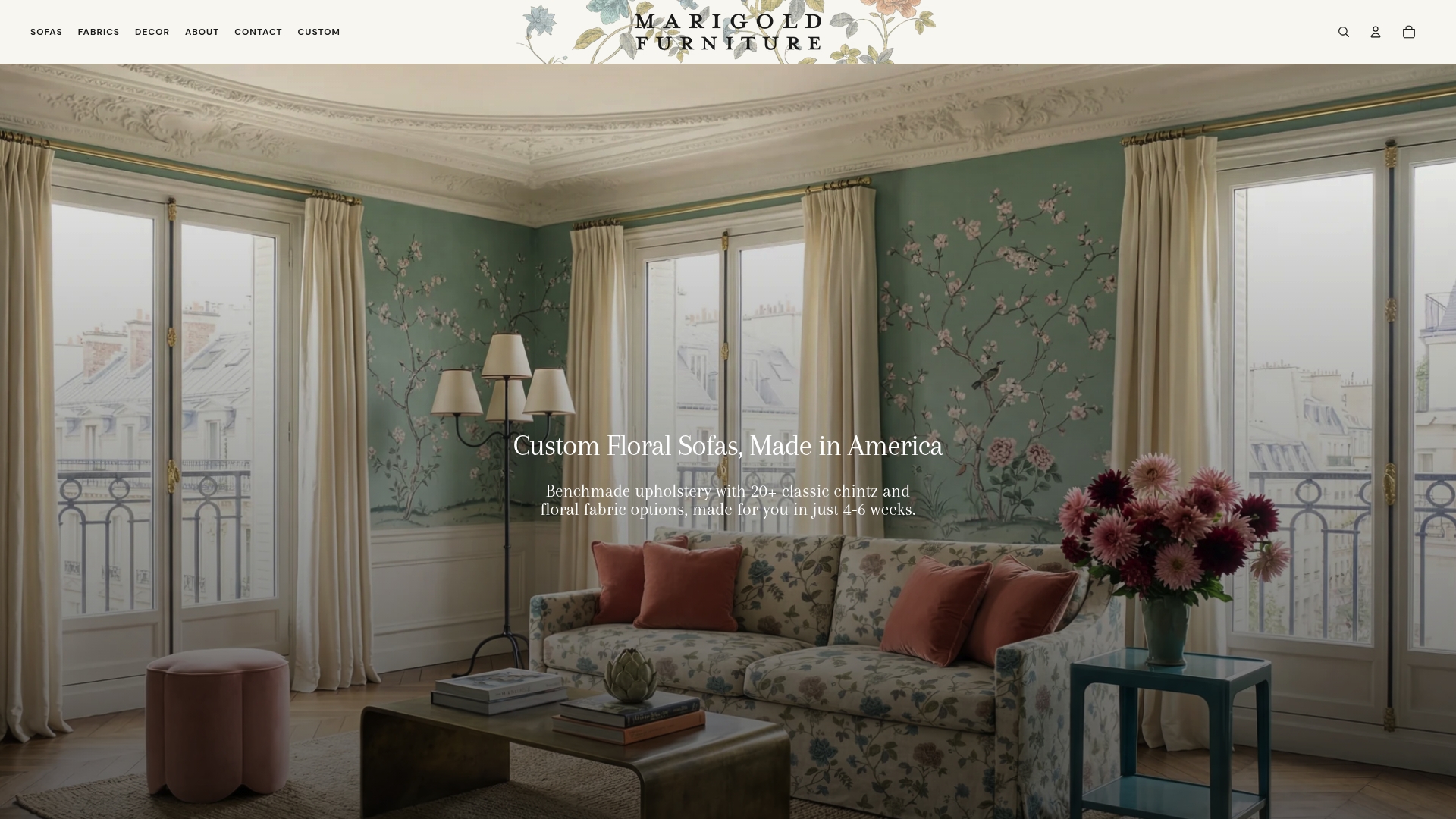
The Florence Arched Floral Sofa and the Giverny Slope-Arm Floral Sofa are both available with fabric options suited to pet households. Each piece ships within 4–6 weeks, made to order with responsibly sourced materials. For pet owners who want to explore the full range of pet-friendly floral fabric types before choosing, Marigold’s fabric guide covers performance, texture, and care requirements in detail.
FAQ
What is the best upholstery fabric for pets?
Performance microfiber, Crypton, and Revolution fabrics are the top choices for most pet households. They combine tight synthetic weaves with integrated stain resistance and score above 45,000 double rubs in abrasion testing.
Does leather work well with pets?
Full-grain and top-grain leather are practical choices because they wipe clean easily and develop a patina with scratches rather than tearing. Bonded leather peels rapidly under pet use and should be avoided.
How do I clean pet stains from upholstery?
Blot the stain immediately with a clean cloth, pressing firmly without rubbing. For performance fabrics, a mild soap and water solution removes most stains without damaging integrated finishes.
What double rub count do I need for a pet household?
Choose fabrics rated at a minimum of 45,000 double rubs. Fabrics at this threshold resist the daily friction from pet contact without showing rapid wear.
Are removable cushion covers worth it for pet owners?
Yes. Machine-washable cushion covers are one of the most practical investments for pet households, allowing full hygiene management without professional cleaning or reupholstery.