

Made-in-America furniture is defined as upholstered goods, case goods, and seating where all or virtually all significant processing, component sourcing, and final assembly occur within the United States, as required by the Federal Trade Commission. That standard is not a marketing slogan. It is a legal threshold with real consequences for brands that fall short. For homeowners who care about craftsmanship, sustainability, and where their dollars go, understanding this distinction is the first step toward buying furniture that truly delivers on its promise. Marigold Furniture builds every sofa in Dallas and Los Angeles, meeting that standard by design, not by accident.
What is made-in-America furniture under FTC rules?
The FTC’s “all or virtually all” standard is the governing test for any unqualified “Made in USA” claim on furniture. Every meaningful stage of production must happen domestically. That means the raw materials, the milling, the frame construction, the upholstery work, and the final assembly all need to take place on American soil.
The FTC draws a clear line between two types of claims:
- Unqualified claims (“Made in USA”): require that all or virtually all components are domestic and that no significant foreign processing occurred.
- Qualified claims (“Made in USA with imported parts”): legally permitted when some foreign content exists, but the qualification must be prominent and honest.
The stakes for getting this wrong are steep. FTC enforcement actions have resulted in penalties as high as $2 million against manufacturers who falsely labeled products as American-made when those products contained significant imported components. That figure signals how seriously the agency treats misleading origin claims.
“The FTC evaluates the overall net impression of a ‘Made in USA’ claim, meaning that even truthful qualifying text can be undermined by imagery, placement, or emphasis that leads consumers to believe a product is fully domestic when it is not.”
The agency also scrutinizes visual cues. American flags or patriotic imagery used alongside products with heavy foreign content can trigger enforcement, even when small-print disclosures technically exist. The net impression rule means the whole package matters, not just the fine print.
Why buy American-made furniture? Key benefits for quality and sustainability
Choosing furniture made in the USA is not simply a patriotic preference. The quality, environmental, and economic arguments are concrete and well-documented.
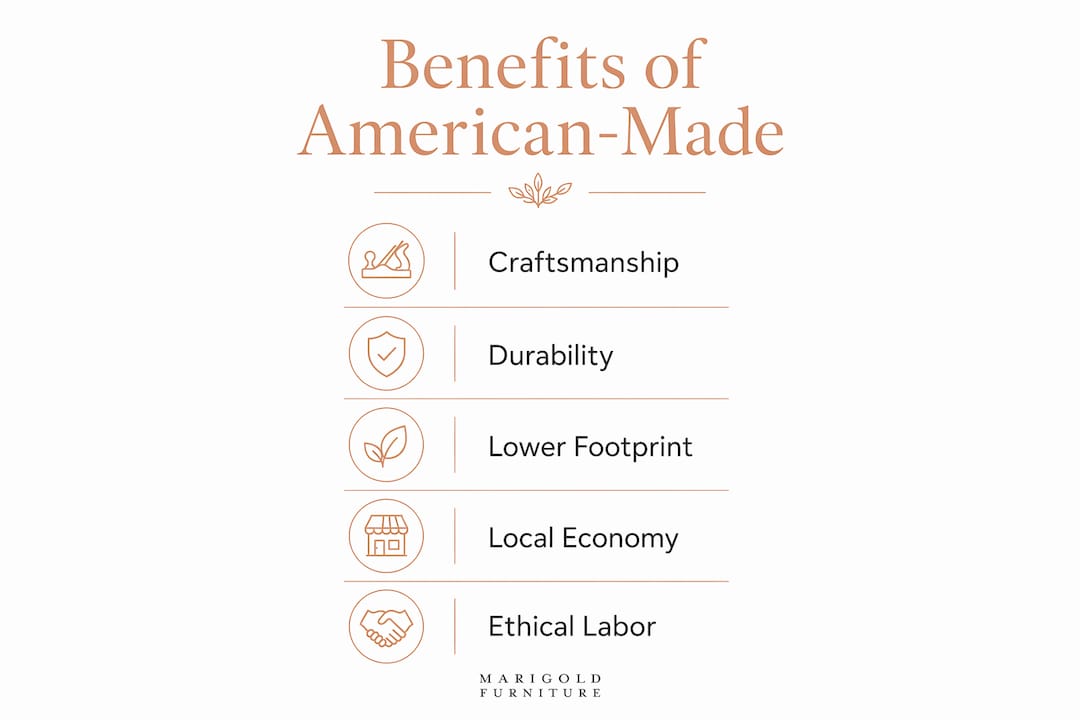
Superior craftsmanship and lasting durability
American furniture makers have long relied on small-batch production and time-tested joinery, including mortise-and-tenon and dovetail construction, that mass-produced imports rarely replicate. Interior designers increasingly specify domestic pieces precisely because those techniques produce furniture that lasts for generations rather than years. A sofa built with benchmade upholstery and a kiln-dried hardwood frame is a fundamentally different object than one assembled from particleboard and staple-gun fabric.

Reduced environmental footprint
Buying American-made furniture cuts carbon emissions by eliminating the long-distance ocean freight that imported goods require. Many domestic manufacturers also use FSC-certified hardwoods, meaning the timber comes from responsibly managed forests. Shorter supply chains mean fewer emissions, less packaging waste, and a smaller overall footprint for each piece. For homeowners committed to sustainable living, that difference is measurable and meaningful.
Support for local economies and ethical labor
Every dollar spent on domestically produced furniture supports American workers under U.S. labor law, with regulated wages, workplace safety standards, and enforceable protections. That accountability simply does not exist in the same form across all overseas manufacturing regions. Buying local also keeps money circulating within American communities, supporting suppliers, craftspeople, and small manufacturers alike.
Here is a quick summary of the core benefits:
- Hardwood frames and quality joinery produce furniture that outlasts imported alternatives by years.
- Shorter supply chains reduce carbon emissions from freight.
- Domestic labor laws protect workers and ensure ethical production.
- Transparent sourcing lets buyers verify exactly what they are getting.
- Long-term value offsets the higher upfront cost over time.
Pro Tip: Ask any furniture brand for the specific species of wood used in the frame. Genuine American makers will name it. Vague answers like “engineered wood” or “solid wood blend” are a signal worth noting.
Common misconceptions about made-in-America furniture labeling
The furniture market is full of terms that sound domestic but carry very different legal meanings. Knowing the difference protects you from paying a premium for a product that does not deliver the quality or ethics you expect.
-
“Assembled in USA” is not the same as “Made in USA.” This label legally applies when the last substantial transformation of a product occurs domestically, even if the vast majority of components were manufactured overseas. A sofa frame built in Vietnam and upholstered in a U.S. warehouse can legally carry this label. It does not mean the piece meets the FTC’s “all or virtually all” standard.
-
Patriotic imagery is not a guarantee of origin. Brands sometimes use American flags, bald eagle graphics, or red-white-and-blue color schemes on products that contain significant foreign content. The FTC evaluates the overall impression a label creates, and imagery alone can constitute a misleading claim.
-
“Designed in USA” means nothing about where the product was built. Design work can happen anywhere. This phrase carries no legal weight under FTC origin rules and says nothing about manufacturing location.
-
Vague sourcing information is a red flag. Authentic American manufacturers openly share factory details, component sourcing, and production processes. A brand that cannot or will not tell you where its frames are built is telling you something important.
-
“Sustainable” does not automatically mean domestic. A product can use recycled materials and still be manufactured overseas. Sustainability and American-made are related values, but they are not the same claim.
Pro Tip: Search the brand name alongside “factory location” or “manufacturing facility” before buying. Genuine makers are proud of their workshops and feature them prominently on their websites.
How to verify the authenticity of American-made furniture before buying
Verification takes about 15 minutes and can save you from a costly mistake. The tools are free and publicly available.
- Check FTC enforcement records. The FTC publishes enforcement actions online. Searching a brand name in those records reveals whether the company has faced prior complaints about misleading origin claims.
- Use import databases. Tools like ImportYeti allow you to search a company’s import history. If a brand claims full domestic production but shows regular shipments from overseas factories, that inconsistency is worth questioning.
- Search factory locations on Google Maps. Genuine manufacturers feature real production facilities, not just corporate office addresses. A factory with street-view imagery, employee reviews, and production photos is a strong authenticity signal.
- Look for factory videos and sourcing disclosures. Authentic American furniture companies often share video tours of their workshops and detailed lists of their material suppliers. Vague references to “our facility” without supporting evidence warrant skepticism.
- Ask direct questions before purchasing. Contact the brand and ask specifically: Where is the frame built? What species of wood is used? Where is the fabric woven? A trustworthy maker answers these questions without hesitation.
| Verification method | What it reveals |
|---|---|
| FTC enforcement search | Prior complaints or penalties for false origin claims |
| ImportYeti database | Actual import history and overseas supplier relationships |
| Google Maps factory search | Whether a real production facility exists at the claimed address |
| Website sourcing disclosures | Transparency about materials, suppliers, and production process |
| Direct seller questions | Willingness and ability to confirm domestic manufacturing details |
Key takeaways
Made-in-America furniture meets the FTC’s “all or virtually all” domestic production standard, and verifying that claim requires checking factory locations, import records, and sourcing disclosures before you buy.
| Point | Details |
|---|---|
| FTC “all or virtually all” standard | Every significant stage of production must occur in the U.S. to support an unqualified claim. |
| “Assembled in USA” is a different claim | This label allows mostly foreign components; it does not meet the full Made in USA threshold. |
| Patriotic imagery can mislead | Flags and American symbols do not substitute for verified domestic manufacturing. |
| Sustainability and quality align | Domestic makers use FSC-certified hardwoods and time-tested joinery that imported pieces rarely match. |
| Verification is straightforward | ImportYeti, FTC records, and direct questions to the brand confirm authenticity in minutes. |
Why transparency is the real measure of American-made furniture
I have spent years working with furniture makers and interior designers, and the single clearest predictor of genuine quality is how freely a brand talks about its process. The brands that hedge, deflect, or bury their sourcing information in fine print are almost always the ones with something to hide.
The growing consumer demand for authentic domestic manufacturing is real, and it is reshaping the market. Buyers are more informed than they were a decade ago. They know how to search import databases. They know the difference between “assembled” and “made.” That shift is good for everyone, because it rewards the makers who have always done things the right way.
What I find most encouraging is the connection between transparency and long-term value. A sofa built by craftspeople who are proud of their work, using materials a brand is willing to name and trace, is a piece that will anchor your living room for 20 years. The upfront cost is higher. The cost per year of use is almost always lower. That math matters for anyone serious about sustainable living.
The pitfall I see most often is buyers focusing on the label rather than the evidence behind it. A tag that says “Made in USA” is a starting point, not a conclusion. The brands worth trusting are the ones that make verification easy, not the ones that make it necessary to dig.
— Kevin O’Gara
Marigold Furniture: handcrafted American-made sofas with genuine transparency
Marigold Furniture builds every sofa in Dallas and Los Angeles, with benchmade upholstery and responsibly sourced materials that meet the standards this article describes. The brand offers over 20 chintz and floral fabric choices, so your sofa reflects your personal aesthetic rather than a factory’s default.
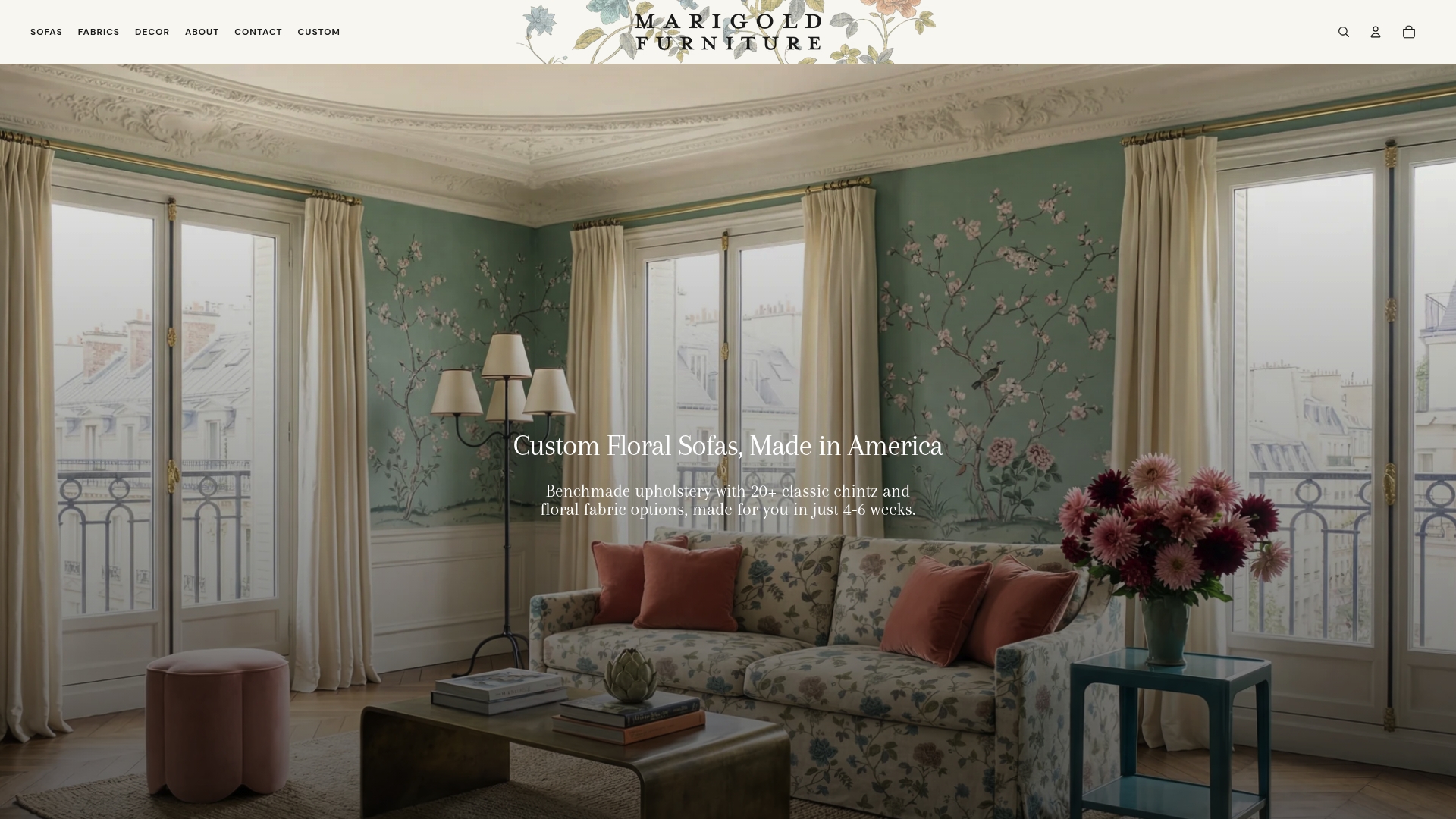
The Florence Arched Floral Sofa and the Giverny Slope-Arm Floral Sofa are two standout examples of what genuine American craftsmanship looks like in a living room. Each piece is made to order with a 4–6 week delivery window, so you receive a sofa built for you, not pulled from a warehouse. Marigold’s sustainability commitments are detailed and publicly available, because transparency is not an afterthought here. It is the foundation.
FAQ
What does “Made in USA” legally mean for furniture?
The FTC requires that all or virtually all of a product’s components, processing, and assembly occur in the United States to support an unqualified “Made in USA” claim. Products that fall short must use a qualified label disclosing the foreign content.
Is “Assembled in USA” the same as “Made in USA”?
No. “Assembled in USA” means the final transformation occurred domestically, but most components may be foreign-made. It does not meet the FTC’s full domestic production standard.
How can I verify that a furniture brand is genuinely American-made?
Search the brand’s import history using ImportYeti, check FTC enforcement records, and look for factory photos or videos on the brand’s website. Ask the brand directly where its frames and fabrics are sourced.
Why does American-made furniture tend to cost more?
Domestic labor laws, higher-quality hardwoods, and small-batch production all contribute to a higher price point. That cost reflects genuine craftsmanship and ethical sourcing, and it typically translates to furniture that lasts significantly longer than mass-produced imports.
Can American flags on packaging guarantee domestic manufacturing?
No. The FTC evaluates the overall impression a label creates, and patriotic imagery used alongside products with significant foreign content can constitute a misleading claim regardless of any fine-print disclosures.