

Benchmade upholstery is defined as furniture handcrafted by skilled artisans at individual workbenches, where human-led assembly and quality control replace conveyor-line production. The term “benchmade” comes directly from the practice of building each piece at a dedicated bench, a tradition rooted in European guild craftsmanship. This approach combines traditional joinery techniques with modern precision tools to deliver furniture that is durable, customizable, and built to last. Understanding what is benchmade upholstery helps you see why it commands a premium and why that premium is often worth paying.
What is benchmade upholstery, and how is it made?
Benchmade upholstery starts with the frame. Kiln-dried hardwood frames and FSC-certified engineered wood form the structural backbone of each piece. Kiln drying removes moisture from the wood, which prevents warping and cracking over time. That foundation alone separates benchmade furniture from mass-produced alternatives that often use particleboard or green lumber.
The joinery is where artisan skill becomes visible. Traditional methods like mortise-and-tenon and dovetail joints lock frame components together without relying solely on glue or staples. These interlocking connections distribute stress across the joint rather than concentrating it at a single point. A well-executed mortise-and-tenon joint can outlast the fabric covering it by decades.
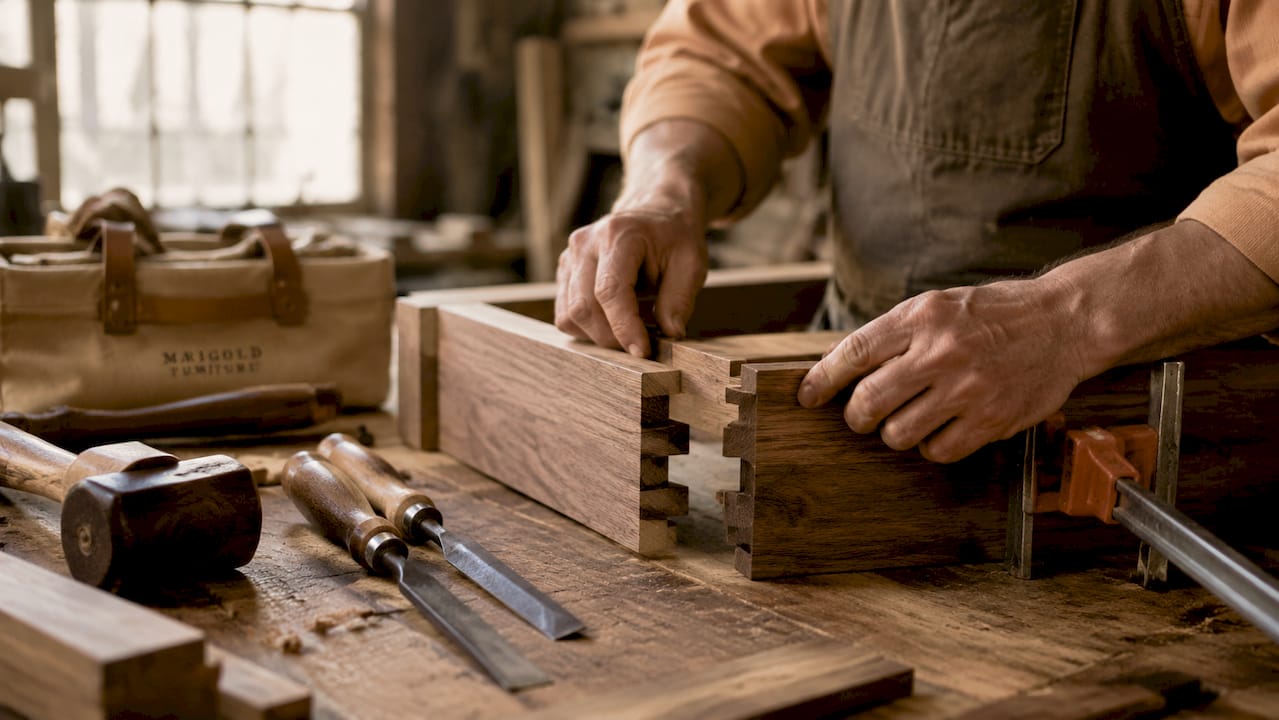
Modern benchmade production does use machinery. CNC routers handle initial precision cutting, ensuring consistent dimensions across every frame component. The critical difference is what happens next. Human hands take over for fitting, assembly, finishing, and quality checks. That hybrid approach yields a level of consistency and care that full automation cannot replicate.
Customization is built into the process from the start. Buyers can specify dimensions, fabric choices, cushion fill types, and finishing details before a single cut is made. Marigold Furniture, for example, offers over 20 chintz and floral fabric options, allowing homeowners to treat each sofa as a blank canvas rather than a showroom compromise.
Key materials and techniques in benchmade upholstery:
- Kiln-dried hardwood or FSC-certified engineered wood frames
- Mortise-and-tenon and dovetail joinery for structural integrity
- CNC-cut components assembled and finished by artisans
- Custom fabric selection, cushion fill, and seat configuration
- Zippered cushion covers for easy rotation and maintenance
Pro Tip: Ask any benchmade furniture maker to confirm whether their frames use kiln-dried wood. That single detail tells you more about long-term durability than any marketing claim.
How does benchmade upholstery differ from mass-produced furniture?
The core difference is who controls quality. Mass-produced furniture moves through conveyor assembly with minimal human oversight at each stage. Benchmade furniture is checked by the same artisan who built it. That personal accountability produces measurably better results.
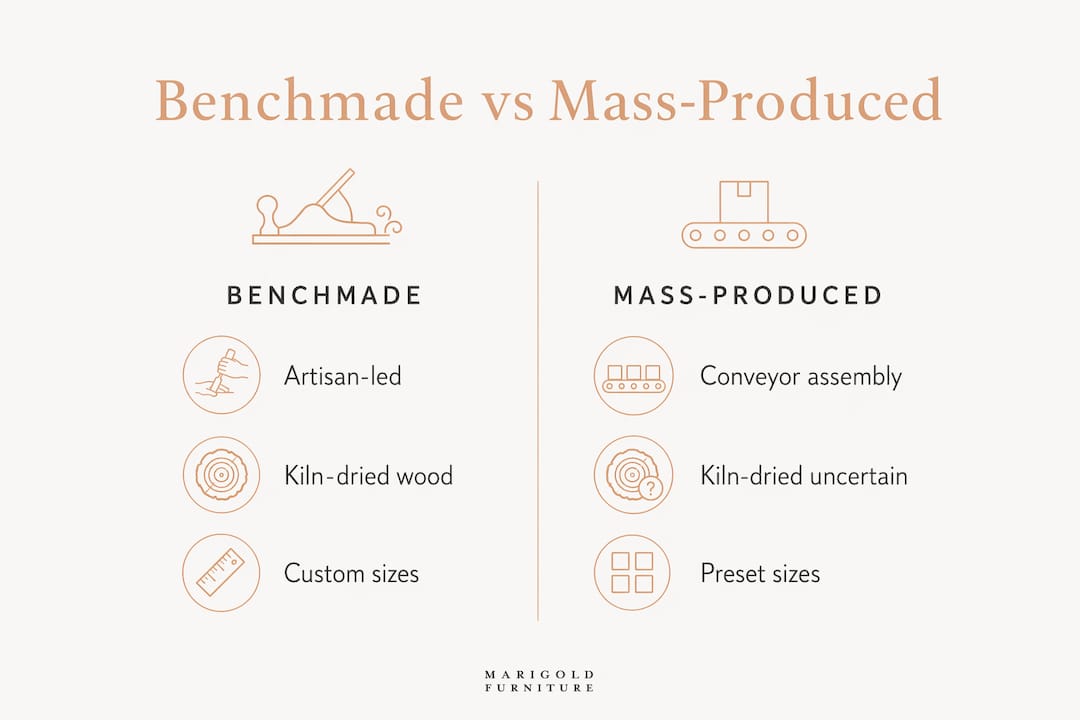
Benchmade furniture longevity exceeds that of mass-produced sofas, with precise joinery designed to hold structure for a decade or more. A mass-produced sofa built with stapled joints and particleboard may show structural weakness within three to five years of regular use. The cost difference between the two looks smaller when measured against lifespan.
Customization is the second major distinction. Mass-produced furniture comes in preset sizes, fabrics, and configurations. Benchmade upholstery lets you control seat depth, arm height, leg finish, and fabric pattern. That design sovereignty leads to better ergonomic fit and better space utilization, especially in rooms with non-standard dimensions.
| Feature | Benchmade upholstery | Mass-produced furniture |
|---|---|---|
| Assembly method | Artisan-led at individual workbenches | Conveyor-line automation |
| Frame materials | Kiln-dried hardwood, FSC-certified wood | Particleboard, green lumber |
| Joinery | Mortise-and-tenon, dovetail joints | Staples, basic glue joints |
| Customization | Dimensions, fabric, fill, configuration | Preset options only |
| Expected lifespan | 10+ years with proper care | 3–7 years typical |
| Quality control | Artisan checks each piece | Spot-checked by line supervisors |
American-made benchmade production adds another layer of quality assurance. Domestic manufacturing allows better oversight and faster resolution when a customer has a concern, compared to overseas production where communication and shipping delays compound any issue. Marigold Furniture handcrafts each sofa in Dallas and Los Angeles, keeping that oversight close and the turnaround time to 4–6 weeks for made-to-order pieces.
The investment in quality upholstery pays off through greater longevity and satisfaction compared to mass-market alternatives. Buying benchmade is not about spending more. It is about spending once.
How do you care for benchmade upholstery?
Proper care extends the life of benchmade upholstery and protects the craftsmanship built into every piece. The good news is that the maintenance routine is straightforward. Consistency matters more than effort.
Follow these steps to keep benchmade upholstery in excellent condition:
- Vacuum weekly using a soft brush attachment. This removes dust and debris before it works into the fabric fibers and causes abrasion. Pay attention to seams and tufted areas where particles collect.
- Rotate and flip cushions monthly. Zippered cushion covers make this easy on most benchmade pieces. Even wear across all sides prevents one area from compressing faster than the rest.
- Keep upholstery out of direct sunlight. UV exposure fades fabric and degrades foam over time. Position sofas away from south-facing windows or use window film to filter light.
- Blot spills immediately with a clean, dry cloth. Never rub. Rubbing spreads the stain and pushes liquid deeper into the cushion fill.
- Schedule professional cleaning once a year. Annual professional cleaning costs around $150 and removes embedded dirt that vacuuming cannot reach. It also refreshes the fabric’s appearance and extends its usable life.
Pro Tip: Before scheduling professional cleaning, check the fabric care tag on your cushion covers. Some chintz and floral fabrics require dry cleaning only, and using water-based methods on them can cause shrinkage or color bleeding.
What should buyers expect when purchasing benchmade upholstery?
Setting the right expectations before you buy makes the ownership experience far more satisfying. Benchmade upholstery rewards patience and planning in ways that off-the-shelf furniture simply does not.
Understand the break-in period. High-density foam cushions feel firmer upon delivery and soften with daily use over several months. This is not a defect. High-density foam holds its shape longer than softer alternatives, which means the sofa you sit on in year three is still supportive, not sunken. Expect the first few weeks to feel different from the long-term experience.
Measure your space before you order. Benchmade furniture is built to your specifications, so errors in measurement become permanent. Use cardboard templates to map out the footprint of your planned sofa on the floor. Check doorway and hallway widths to confirm delivery access. A sofa built to 90 inches wide needs a clear path to reach its final position.
Consider these customization decisions carefully:
- Seat depth affects comfort for different body types. Deeper seats suit taller people; shallower seats work better for petite frames.
- Cushion fill options range from high-density foam to down-wrapped foam. Down-wrapped feels luxurious but requires more fluffing. High-density foam is lower maintenance.
- Fabric pattern placement matters on floral and chintz designs. Ask your maker how the pattern will align across cushions and back panels.
- Configuration choices, such as chaise placement or sectional orientation, should reflect how you actually use the room, not how it photographs.
Custom sofa design gives you control over every one of these decisions. That control is the defining advantage of benchmade upholstery over anything you pull off a showroom floor.
Key Takeaways
Benchmade upholstery is the most durable and customizable category of upholstered furniture, built by artisans using traditional joinery and quality materials that mass production cannot match.
| Point | Details |
|---|---|
| Artisan-led assembly | Each piece is built and checked by hand, not conveyor line, for superior quality control. |
| Kiln-dried hardwood frames | Moisture-free wood prevents warping and forms the structural foundation of lasting furniture. |
| 10+ year lifespan | Precise joinery and quality materials outlast mass-produced sofas by years when properly maintained. |
| Full customization | Buyers control dimensions, fabric, fill, and configuration before production begins. |
| Simple maintenance routine | Weekly vacuuming, monthly cushion rotation, and annual professional cleaning preserve the investment. |
Why benchmade upholstery changed how I think about furniture
I spent years recommending furniture based on aesthetics alone. A sofa looked right in a room, the color worked, the price was acceptable, and that was enough. Then I started paying attention to what happened to those pieces after two or three years of real use. The frames shifted. The cushions flattened. The fabric pilled at the seams. The furniture had not aged. It had simply worn out.
Benchmade upholstery reframed the entire question for me. The hallmark of benchmade furniture is not the absence of machinery. It is the human-led final assembly and quality checks that conveyor production cannot replicate. When I started looking at furniture through that lens, the premium made complete sense.
What surprises most buyers is how much the break-in period changes their perception. A benchmade sofa feels different at delivery than it does six months later. That initial firmness is the high-density foam doing its job. Buyers who understand this arrive at year two with a sofa that still performs. Buyers who do not understand it sometimes return a piece that was working exactly as designed.
My practical advice: ask about the frame before you ask about the fabric. Confirm kiln-dried hardwood. Ask about the joinery method. If a maker cannot answer those questions clearly, the craftsmanship may not be there. The sustainability practices behind the materials matter too, especially if you want furniture that aligns with values beyond aesthetics.
Benchmade upholstery is a living design tradition. It connects the room you live in today to centuries of craft knowledge. That connection is worth something real.
— Kevin O’Gara
Marigold Furniture’s handcrafted upholstery collections
Marigold Furniture brings benchmade upholstery to life through custom floral sofas handcrafted in Dallas and Los Angeles. Each piece is built with kiln-dried hardwood frames, traditional joinery, and your choice from over 20 chintz and floral fabrics, including vibrant options like the Boboli Green and Purple Floral and the Rosemoor Chintz Floral. Every sofa ships in 4–6 weeks, made to your exact specifications with responsibly sourced materials.
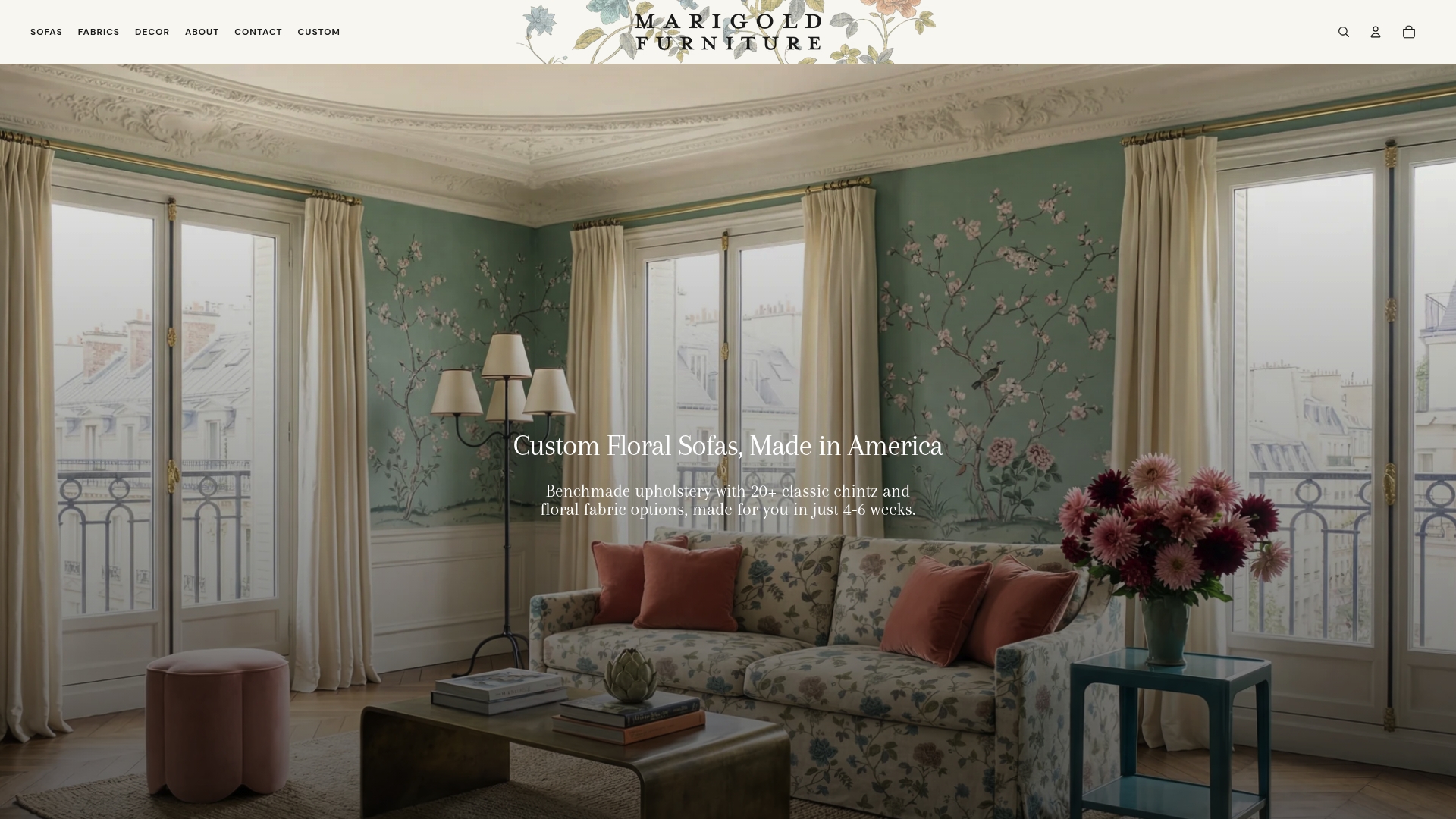
The Florence Arched Floral Sofa is one of Marigold’s most beloved pieces, combining a graceful arched silhouette with fully customizable upholstery. If you are ready to own furniture built to last, Marigold Furniture is where that decision begins.
FAQ
What does “benchmade” mean in furniture?
Benchmade means each piece is built by a skilled artisan at an individual workbench rather than on a factory conveyor line. The process emphasizes human-led assembly, traditional joinery, and hands-on quality control.
How long does benchmade upholstery last?
Benchmade upholstery is designed to hold its structure for a decade or more with proper care. Precise joinery techniques like mortise-and-tenon distribute stress across the frame, preventing the early failure common in mass-produced furniture.
Is benchmade upholstery worth the higher price?
Benchmade upholstery costs more upfront but outlasts mass-produced alternatives by years, making the per-year cost competitive. Greater customization and better materials add long-term satisfaction that justifies the investment.
How do I maintain benchmade upholstery?
Vacuum weekly with a soft brush attachment, rotate cushions monthly, and schedule professional cleaning about once a year at an estimated cost of around $150. Avoid direct sunlight to prevent fabric fading.
Can I customize a benchmade sofa to fit my room?
Benchmade upholstery is built to your specifications, including seat depth, dimensions, fabric choice, and configuration. Measure your space carefully and use floor templates before placing your order to confirm fit.