

COM upholstery is defined as a furniture arrangement where the customer supplies their own fabric, known in the trade as Customer’s Own Material, rather than selecting from a manufacturer’s standard offerings. This approach gives you total design control, letting you bring exclusive textiles, heirloom prints, or vibrant florals to a piece built entirely around your vision. Programs like the Hendricks Fine Furniture COM program have made this process accessible to designers and homeowners alike. Understanding COM upholstery meaning is the first step toward creating furniture that feels genuinely personal, not just purchased.
What is COM upholstery and how does it work?
COM upholstery is the industry-standard term for any project where the client, not the manufacturer, provides the face fabric. The manufacturer or upholstery shop supplies the labor, foam, padding, frame work, and all structural components. Your fabric arrives at their workroom and gets applied to the piece you have chosen. This separation of fabric sourcing from furniture production is what makes COM so powerful for custom design.
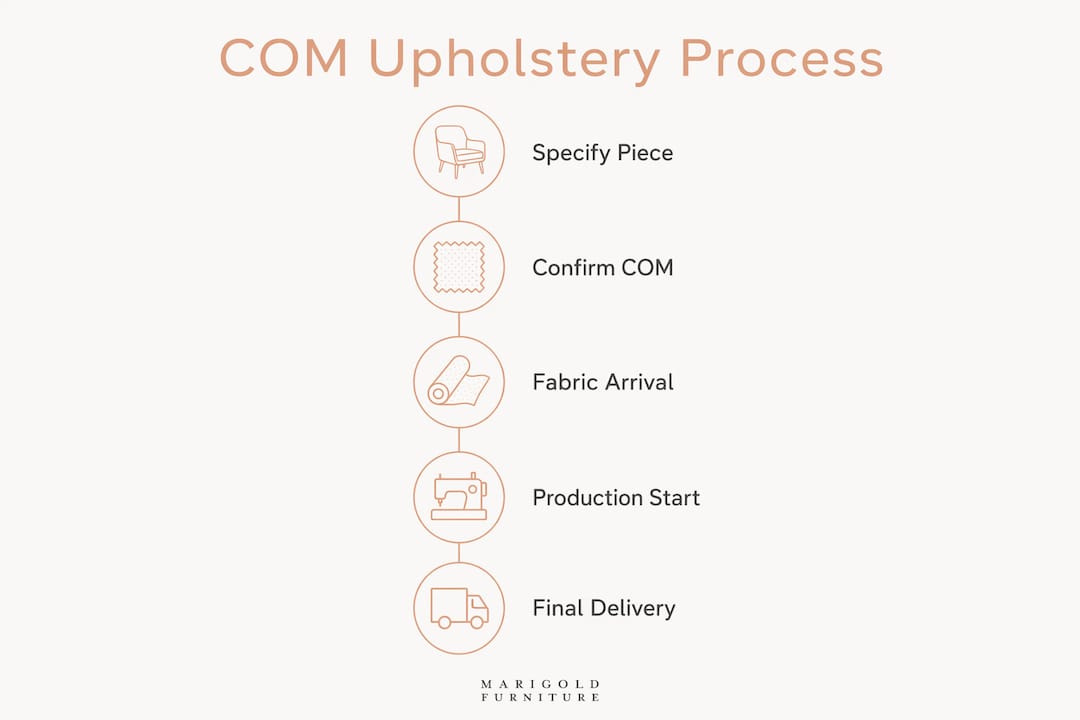
The process follows five clear stages. First, you specify the piece and confirm the COM arrangement with your upholsterer. Second, the shop calculates the yardage your piece requires. Third, you ship or deliver the fabric directly to the workroom. Fourth, the shop inspects the fabric for flaws, width accuracy, and quantity. Fifth, production begins and the piece is assembled with your material.
Fabric arrival timing controls the entire production schedule. If your fabric ships late or arrives short, the delivery date moves. This is the single most common source of delay in COM projects, and it is entirely within your control to prevent.
Pro Tip: Ship your fabric with tracking and request a confirmation email from the shop the day it arrives. A two-day gap between arrival and inspection can quietly push your delivery by a week.
What practical challenges come with COM fabric selection?
Fabric suitability is the first filter every COM project must pass. Upholstery fabric requires adequate weight, a tight weave, real durability, and minimal stretch. Lightweight drapery fabrics, loosely woven linens, and delicate silks often fail under the tension of upholstery application. A fabric that looks beautiful on a bolt can split at seams or pill within months when pulled across a seat cushion.
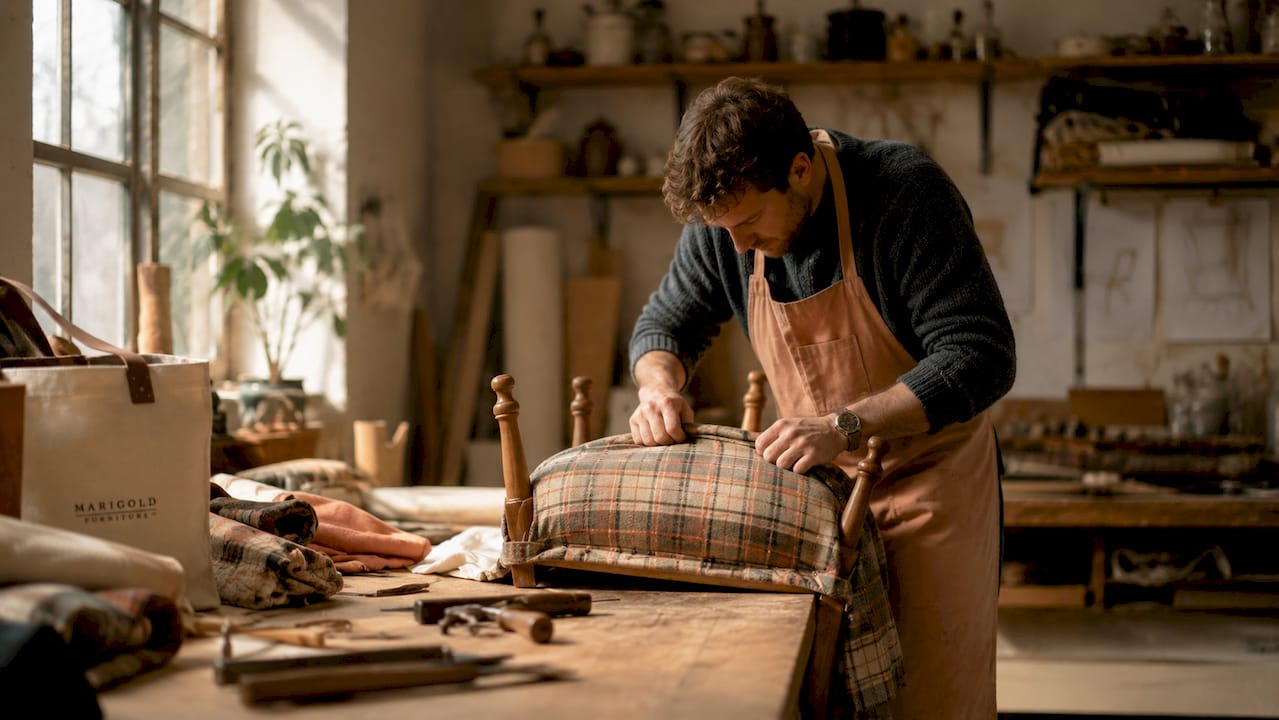
Yardage is where most COM projects run into trouble. About 30% of COM fabric projects encounter problems tied to insufficient yardage or incorrect assumptions about fabric width and pattern repeat. That number reflects a real and avoidable risk. Ordering 15–20% more fabric than your base yardage calculation suggests is the standard professional practice for managing pattern repeat waste.
Pattern repeats and nap direction multiply your yardage needs significantly. A fabric with a large floral repeat, say 24 inches, requires each panel to be cut at the start of a repeat. That means waste between panels. Nap direction, the way velvet or chenille fibers run, requires all panels to be cut in the same orientation. Both factors can add 20% or more to your total yardage on a single sofa.
Here are the key fabric considerations to verify before committing to a COM project:
- Fabric weight and weave: Choose upholstery-grade fabrics rated for furniture use, not drapery or apparel textiles.
- Pattern repeat size: Measure the vertical repeat and multiply by the number of panels to estimate additional yardage.
- Nap direction: Confirm with your upholsterer whether your fabric requires directional cutting.
- Fabric width: Standard upholstery fabric runs 54 inches wide. Narrower fabric requires more yardage per panel.
- Colorfastness and finish: Confirm the fabric is treated or rated for the wear level your household demands.
Pro Tip: Ask your upholstery shop for a panel-by-panel yardage breakdown before you order. A detailed yardage calculation based on actual fabric width and piece layout prevents the mid-job shortage that derails timelines.
One detail many homeowners miss is that face fabric yardage covers only the visible surface. Upholstery projects also require secondary materials including decking fabric for seat bases, cambric dust covers for the underside, and muslin underlayers. These are separate from your COM fabric and must be budgeted independently. Your upholsterer typically supplies these, but confirm it upfront so there are no surprises on the final invoice.
| Fabric type | What it covers | Supplied by |
|---|---|---|
| Face fabric (COM) | All visible exterior surfaces | You, the customer |
| Decking fabric | Hidden seat base under cushions | Upholstery shop |
| Cambric dust cover | Underside of the piece | Upholstery shop |
| Muslin underlayer | Base layer beneath face fabric | Upholstery shop |
COM upholstery vs. standard manufacturer fabric: which is right for you?
Standard manufacturer fabric options offer speed and predictability. The shop knows exactly how their stock fabrics perform, how much yardage each piece needs, and how the material behaves during production. Lead times are shorter because no fabric sourcing step exists. For homeowners who want a beautiful sofa without managing logistics, standard options are the lower-risk path.
COM upholstery delivers something standard options cannot: the ability to use a fabric that exists nowhere else in the room, or anywhere else at all. You might have inherited a bolt of hand-printed chintz from a grandmother’s estate. You might have found a fabric at a Paris textile house that no American retailer stocks. COM is the only way to put that material on a piece of furniture built to your specifications.
The tradeoffs are real and worth naming clearly.
| Factor | COM upholstery | Standard manufacturer fabric |
|---|---|---|
| Design control | Complete, any fabric you source | Limited to available options |
| Lead time | Longer, depends on fabric shipping | Shorter, fabric is in stock |
| Cost | Higher, fabric cost is separate | Included in furniture price |
| Risk of delay | Higher, fabric arrival drives schedule | Lower, shop controls timeline |
| Fabric uniqueness | Unlimited | Restricted to catalog |
| Yardage responsibility | Yours to calculate and supply | Manufacturer handles it |
The right choice depends on how much the fabric itself matters to you. If the specific textile is the point, COM is worth every extra step. If you want a beautiful result with fewer variables to manage, a curated standard selection from a skilled maker is the smarter path.
Best practices for managing a COM upholstery project
A successful COM project comes down to preparation, communication, and a healthy respect for the details that trip people up. These practices reflect what experienced designers and upholsterers consistently recommend.
- Run your own yardage calculation first. Do not rely solely on the shop’s estimate. Cross-check it against your fabric’s width, pattern repeat, and nap direction. Client yardage estimates often differ from actual needs, and the discrepancy almost always runs short, not long.
- Measure the fabric physically when it arrives at the shop. Fabric sold as 54 inches wide sometimes measures 52 inches off the bolt. That two-inch difference changes your panel count. Ask the shop to confirm measurements on arrival before cutting begins.
- Communicate every fabric specification in writing. Send a spec sheet that includes pattern repeat dimensions, nap direction, fabric width, and any care instructions. Verbal conversations get forgotten; written specs do not.
- Build a timing buffer into your project schedule. Add at least one week to your fabric shipping estimate. Customs delays, carrier errors, and backorders happen. A buffer protects your delivery date.
- Inspect the furniture structure, not just the fabric. A professional upholsterer controls multiple layers beyond the face fabric, including frame integrity, spring support, and padding. If the underlying structure is compromised, new fabric will not fix the problem. Ask for a structural assessment before production starts.
- Confirm secondary fabric and supply needs upfront. Verify that the shop is supplying decking, cambric, and muslin as part of their labor quote. If not, source and ship those materials alongside your face fabric.
Pro Tip: Order a half-yard sample of your COM fabric and ask the shop to test it on a small panel before full production. This catches stretch, fraying, and dye transfer issues before they affect the entire piece.
Key Takeaways
COM upholstery gives you complete fabric freedom, but that freedom requires careful yardage planning, fabric suitability checks, and clear communication with your upholstery shop to succeed.
| Point | Details |
|---|---|
| COM definition | Customer’s Own Material means you supply the face fabric; the shop supplies labor and structure. |
| Yardage overage | Order 15–20% more fabric than base calculations suggest to cover pattern repeats and nap waste. |
| Secondary fabrics | Decking, cambric, and muslin are separate from COM fabric and must be confirmed with your shop. |
| Fabric suitability | Only upholstery-grade fabrics with adequate weight, tight weave, and durability belong on furniture. |
| Structural inspection | New fabric cannot fix a compromised frame; always assess the underlying structure before production. |
Why COM upholstery rewards the patient and the particular
I have worked with enough custom furniture projects to say this plainly: COM upholstery is not for everyone, and that is perfectly fine. It is for the person who has found a fabric that stops them cold, the kind of textile that carries a story or a color that no standard catalog will ever replicate. For that person, the extra logistics are not a burden. They are part of the craft.
What I see go wrong most often is not the fabric choice itself. It is the underestimation of what the process demands. Homeowners arrive with a gorgeous chintz, three yards short of what the piece actually needs, and no pattern repeat calculation done. The shop cannot proceed. The timeline collapses. The frustration is real, and it was entirely preventable.
The other mistake I see is treating COM as purely a fabric decision. Replacing upholstery fabric alone does not fix a sagging frame or worn-out padding. The fabric is the final layer of a system. If the system beneath it is tired, your beautiful COM textile is just covering up a problem. Always ask your upholsterer to evaluate the full piece, not just the surface.
When COM works, it works beautifully. The collaboration between a client who knows exactly what they want and a skilled upholsterer who knows how to deliver it produces furniture that feels alive in a room. That is the version of this process worth pursuing.
— Kevin O’Gara
Custom floral sofas and COM upholstery at Marigold Furniture
Marigold Furniture was built for the homeowner who refuses to settle for whatever fabric happens to be in stock. Every sofa is benchmade by hand in Dallas and Los Angeles, with a 4–6 week delivery window for made-to-order pieces.
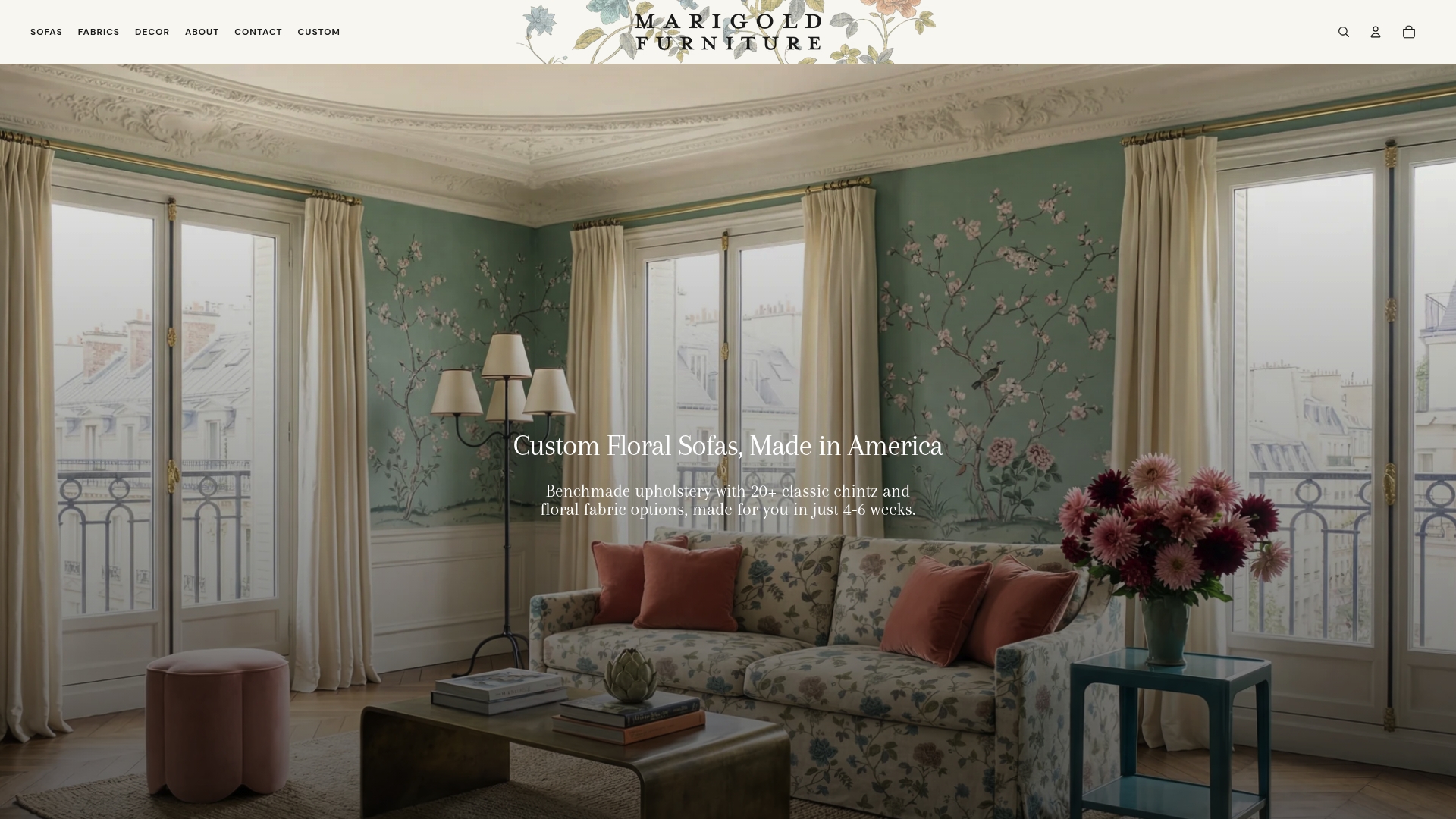
Marigold offers over 20 chintz and floral fabric choices for customers who want a curated selection, and the team is experienced in handling COM arrangements for those who arrive with their own textile vision. The Florence Arched Floral Sofa and the Giverny Slope-Arm Floral Sofa are two standout pieces that showcase what handcrafted upholstery looks like when the fabric and the structure are equally considered. All materials are responsibly sourced, and every piece is built to last. Visit Marigold Furniture’s custom sofa design page to start the conversation about your fabric and your vision.
FAQ
What does COM mean in upholstery?
COM stands for Customer’s Own Material. It means the customer supplies the face fabric for their furniture project, while the upholstery shop provides labor, padding, and structural components.
How much extra fabric should I order for a COM project?
Order 15–20% more than your base yardage calculation to account for pattern repeats, nap direction, and layout waste. Large pattern repeats can push that number even higher.
Can I use any fabric for COM upholstery?
No. Fabric suitability for upholstery depends on weight, weave, durability, and stretch. Drapery fabrics, delicate silks, and loosely woven textiles are generally not appropriate for furniture use.
Does COM upholstery cost more than standard options?
COM upholstery typically costs more in total because you purchase the fabric separately from the labor quote. The furniture price covers only the shop’s work, not the material you supply.
What secondary fabrics does a COM project still require?
Upholstery projects require decking fabric, cambric dust covers, and muslin underlayers in addition to your face fabric. These are usually supplied by the shop and should be confirmed in your labor quote before production begins.