

Floral upholstery in Victorian contemporary interiors is defined as the practice of pairing ornate, historically inspired floral fabrics with clean-lined modern furniture and neutral architectural backdrops. Interior designers call this approach “Modern Victorian,” and it works because the tension between old and new creates rooms that feel grand yet genuinely livable. The key to getting it right lies in two foundational tools: the 80/20 modern-Victorian balance and the deliberate use of large-scale, painterly floral patterns rather than the dense, tiny motifs of traditional Victorian decor. Marigold Furniture has built its entire craft around this balance, offering benchmade floral sofas in over 20 chintz and floral fabric choices for homeowners who want something genuinely beautiful and personal.
What are the essential principles for blending floral upholstery in Victorian contemporary interiors?
The 80/20 rule is the single most useful guideline for this style. Allocate 80% of your room to modern, neutral elements and reserve 20% for Victorian anchors with floral upholstery. That ratio keeps the space from feeling like a period museum while still delivering the richness and warmth that makes Modern Victorian so appealing.
Neutral base colors are the backbone of this approach. Warm greige, stone, and off-white walls give jewel-toned floral upholstery room to breathe. Accent colors like charcoal, plum, teal, and burnt umber can then appear in pillows, throws, and smaller decorative pieces without overwhelming the eye.
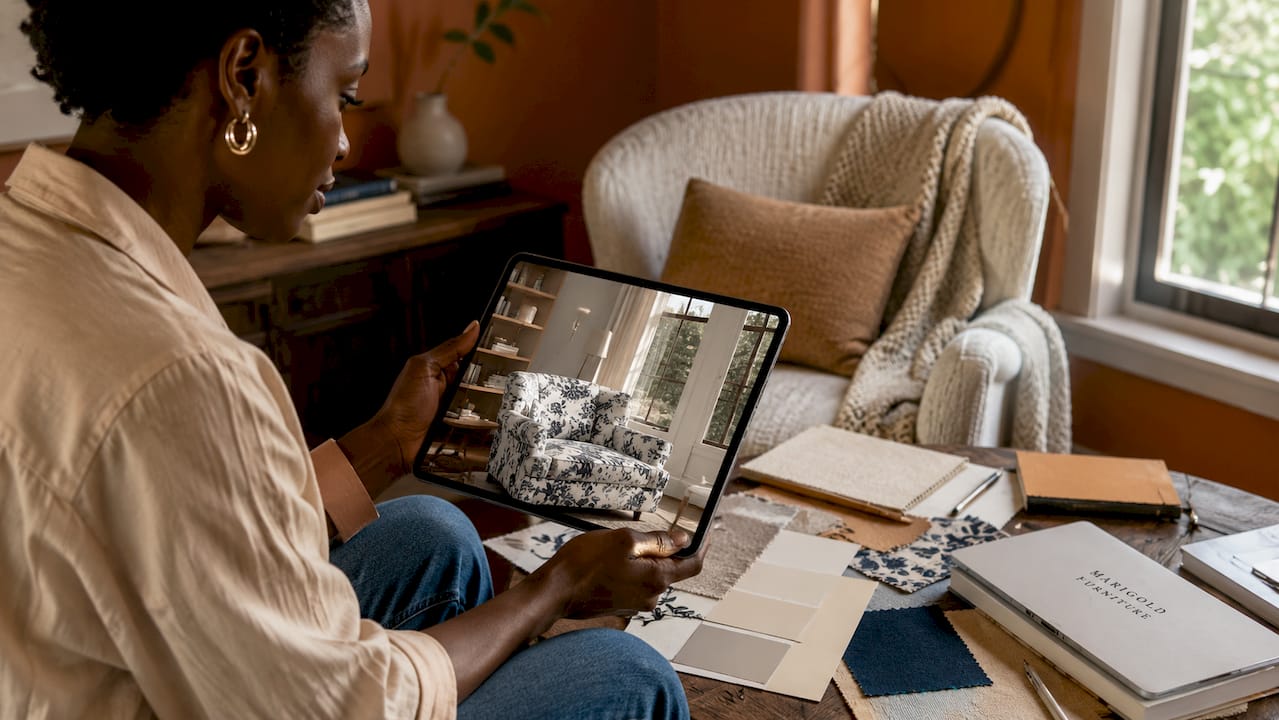
Pattern scale matters more than most decorators expect. Oversized botanical prints read as fresh and artistic, while small, repetitive florals can feel dated and cluttered. Choosing a large-scale, painterly floral for your primary upholstered piece sets a confident, contemporary tone even when the motif itself is historically rooted.
Restraint is the discipline that holds everything together. Emphasize one or two architectural or furniture features rather than saturating every surface with Victorian pattern. The goal is a curated, layered feel that rewards a second look, not a room that exhausts the eye on first glance.
Key principles to keep in mind:
- Neutral walls first. Paint walls in warm greige or off-white before introducing any floral upholstery.
- One statement piece. Let a single floral sofa or armchair anchor the room rather than upholstering every seat.
- Odd-number layering. Group decorative pillows and accessories in threes or fives for a natural, collected look.
- Consistent accent colors. Pull one or two colors from your floral fabric and repeat them in small accessories throughout the room.
Pro Tip: Before purchasing floral upholstery, photograph your room and overlay a digital swatch of the fabric. Scale that feels right in a showroom can read very differently against your actual wall color and floor tone.
How to select floral upholstery fabrics that suit modern Victorian interiors?
Fabric choice is where the Modern Victorian aesthetic either succeeds or falls apart. Modern performance fabrics now mimic the look and hand of velvet, brocade, and damask while offering the durability that contemporary living demands. That combination makes them the ideal vehicle for Victorian-inspired floral patterns in homes that are actually used.
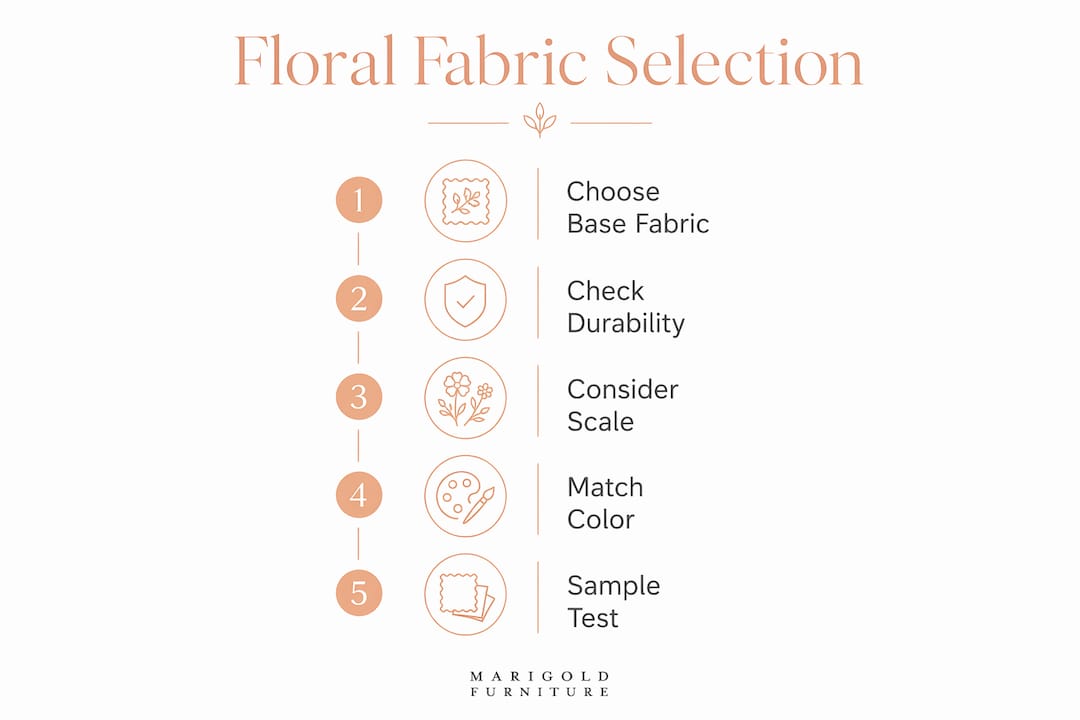
Traditional Victorian upholstery relied on silk damasks, wool brocades, and cotton chintzes. These materials are beautiful but fragile. Today’s performance weaves replicate their visual richness while resisting staining, fading, and wear. Choosing a performance fabric means your floral sofa remains a beloved companion for years, not a piece you’re afraid to sit on.
Pattern scale and color
Large-scale florals with loose, painterly brushwork read as contemporary even when the botanical subject matter is Victorian. Dense, small-repeat patterns tend to feel heavier and more period-specific. For a living room anchor piece, a bloom that spans at least six to eight inches across the fabric repeat strikes the right balance between heritage and freshness.
Color temperature matters as much as hue. Warm-toned florals in terracotta, blush, and gold harmonize naturally with wood floors and warm-white walls. Cool-toned florals in teal, plum, and sage work beautifully against stone or charcoal accents. Matching the temperature of your floral fabric to your room’s existing palette is the fastest way to achieve harmony across eras.
Fabric types worth considering
| Fabric type | Victorian reference | Modern benefit |
|---|---|---|
| Performance velvet | Tufted Victorian parlor chairs | Stain-resistant, soft, rich color depth |
| Printed chintz | Classic English country florals | Crisp pattern definition, easy to clean |
| Woven brocade look | Victorian damask upholstery | Textural depth without fragility |
| Linen-cotton blend | Victorian botanical prints | Breathable, relaxed, works in warm climates |
Pro Tip: Order fabric samples and live with them in your room for at least 48 hours before committing. Natural and artificial light change floral colors dramatically, and what looks vibrant at noon can appear muddy by lamplight.
Marigold Furniture’s performance fabric floral sofas are benchmade in Dallas and Los Angeles using responsibly sourced materials, giving you Victorian-inspired beauty without sacrificing practicality.
How to mix antique Victorian furniture with modern pieces using floral upholstery?
Victorian furniture is defined by carved hardwoods, curved silhouettes, and tufted upholstery. These pieces carry enormous visual weight. The most effective strategy is to use one or two Victorian pieces as anchors and surround them with modern furniture that has clean lines and neutral upholstery.
The critical insight here is that shared finishes tie eras together far more effectively than matching furniture styles. A Victorian carved walnut side table and a modern oak credenza feel related when both carry warm wood tones. Brass hardware on a Victorian mirror and a contemporary floor lamp creates visual continuity without any period matching at all.
Anchor pieces that work well
- A tufted velvet sofa with carved wooden legs, such as the Seville Tufted-Back Floral Sofa from Marigold Furniture, brings Victorian structure with modern comfort.
- A carved armchair reupholstered in a large-scale botanical print becomes a statement without dominating the room.
- A gilded or dark-framed Victorian mirror hung above a simple modern console creates instant period tension.
Common mistakes to avoid
- Matching suites. Buying a full Victorian-style furniture set makes a room feel like a period recreation, not a personal home. Mix eras deliberately for a collected, layered feel.
- Ignoring scale. A large Victorian carved sofa paired with a tiny modern coffee table creates visual imbalance. Keep proportions in conversation with each other.
- Overloading pattern. If your Victorian anchor piece carries a bold floral, keep surrounding upholstery in solid or subtly textured fabrics.
- Neglecting the floor. A simple, large-scale rug in a solid or geometric pattern grounds mixed-era furniture and prevents the room from feeling chaotic.
The Giverny Slope-Arm Floral Sofa pairs particularly well with modern walnut side tables and a clean-lined linen armchair, demonstrating how a single floral anchor piece can carry an entire room’s personality.
What styling techniques integrate floral upholstery into contemporary interiors effectively?
Accent walls are one of the most powerful tools in this style. Placing one floral patterned accent wall while keeping the remaining walls neutral creates a focused Victorian backdrop without visual overload. The accent wall frames the room’s anchor furniture and gives the floral upholstery a natural companion without competing with it.
Throw pillows are the most flexible layering tool you have. Use 22-inch square pillows at the back of a sofa and 18-inch or lumbar pillows in front for a curated, designer-approved arrangement. Odd numbers feel more natural than even groupings. Pull colors from your floral upholstery and repeat them in the pillow fabrics to create cohesion across the room.
Balancing pattern and texture
The most successful Modern Victorian rooms use one bold pattern as the lead and support it with solid or subtly textured fabrics. If your sofa carries a large-scale floral, keep curtains in a solid linen or a quiet stripe. If your curtains carry a damask, keep the sofa upholstery in a tonal velvet. Layering multiple patterns works when colors coordinate and scales differ, but one bold pattern per visual plane is the reliable rule.
| Element | Victorian touch | Contemporary balance |
|---|---|---|
| Sofa | Large-scale floral chintz | Clean-lined silhouette, tapered legs |
| Curtains | Damask or botanical print | Floor-length, simple rod hardware |
| Pillows | Jewel-toned velvet or floral | Solid linen or geometric weave |
| Walls | One floral or botanical accent wall | Remaining walls in warm neutral |
| Accessories | Gilded mirror, fringed throw | Simple ceramic vessels, natural wood |
Victorian details work best when they appear selectively. A gilded mirror above a fireplace, a fringed throw draped over a modern chair, or a single framed botanical print on a neutral wall each add period warmth without tipping the room into costume territory.
Pro Tip: Use the Meadow Collection throw pillows from Marigold Furniture to test floral pattern combinations in your room before committing to a full upholstery purchase. Pillows are low-risk and high-impact.
Key Takeaways
Floral upholstery in Victorian contemporary interiors succeeds when the 80/20 modern-Victorian ratio, large-scale botanical patterns, and shared finishes work together across furniture, fabric, and accessories.
| Point | Details |
|---|---|
| Apply the 80/20 rule | Keep 80% of the room modern and neutral; reserve 20% for Victorian floral anchor pieces. |
| Choose large-scale patterns | Oversized, painterly florals read as contemporary; small-repeat Victorian motifs feel dated. |
| Use shared finishes | Tie Victorian and modern pieces together with consistent brass or wood tones, not style matching. |
| Layer pillows in odd numbers | Use 22-inch square pillows at back and 18-inch or lumbar pillows in front for a curated look. |
| One bold pattern per plane | Limit each visual surface to one dominant pattern; balance with solid or textured supporting fabrics. |
The tension that makes a room come alive
I’ve spent years working with floral upholstery, and the single most common mistake I see is timidity. Homeowners fall in love with a jewel-toned botanical sofa in a showroom, then surround it with so many neutrals that the piece loses all its power. The room ends up feeling beige with a floral apology sitting in the corner.
The truth is that the tension between a carved, tufted Victorian sofa and a sleek modern coffee table is exactly what makes a room feel alive. That productive friction, old meeting new, is not a design problem to solve. It is the point. When you let a floral sofa design hold its ground against clean-lined modern furniture, both pieces become more interesting than they would be in a room full of their own kind.
The other thing I’ve learned is that color does more unifying work than style ever can. A Victorian tufted armchair and a modern slipper chair look related the moment they share a plum or teal pulled from the same floral fabric. You don’t need to match silhouettes. You need to share a palette. That single insight has saved more rooms than any furniture rule I know.
— Kevin O’Gara
Marigold Furniture’s floral sofas for modern Victorian homes
Marigold Furniture handcrafts each sofa in Dallas and Los Angeles, with a 4–6 week delivery window for made-to-order pieces. Every sofa is benchmade using responsibly sourced materials and available in over 20 chintz and floral fabric choices, so you can match your exact palette and scale preference.
The Florence Arched Floral Sofa brings a refined arched silhouette that complements both Victorian and contemporary rooms. The Seville Tufted-Back Floral Sofa delivers classic tufted structure in performance fabric, and the Giverny Slope-Arm Floral Sofa offers a cleaner, more relaxed profile for rooms that lean modern. Browse the full collection and design your custom sofa to find the piece that anchors your space with confidence.
FAQ
What is the 80/20 rule in Modern Victorian interiors?
The 80/20 rule allocates 80% of a room to modern, neutral elements and 20% to Victorian anchor pieces with floral upholstery. This balance keeps the space livable and contemporary while preserving the richness of Victorian pattern and craftsmanship.
How do I choose the right floral pattern scale for my sofa?
Large-scale, painterly florals with blooms spanning six inches or more across the fabric repeat read as fresh and contemporary. Small, dense repeat patterns tend to feel more traditionally Victorian and can make a room feel heavier.
Can I mix Victorian floral upholstery with modern furniture?
Yes. The most effective approach uses shared finishes like brass hardware or warm wood tones to connect Victorian and modern pieces, rather than matching furniture silhouettes or styles.
How many patterned pieces should a room have?
One bold pattern per visual plane is the reliable rule. If your sofa carries a large-scale floral, keep curtains and remaining upholstery in solid or subtly textured fabrics to avoid visual competition.
What fabric types work best for Victorian-inspired floral upholstery today?
Performance velvet, printed chintz, and woven brocade-look fabrics replicate the visual richness of traditional Victorian textiles while offering the durability and stain resistance that contemporary homes require.